
Fish-O-Gram! Pink Scallop Breakthrough!!!! Chinese New Year--Rooster Time!! 2017, Year of the Halibut!!!

Dear Snow-Bound, but Still Pinkly Amorous Customers,
Pink Apotheosis!!!!!!
After seven years of struggle, Thousands of hours of our time, time of dive master Joe Stephens, intercession from State reps Doug Erickson, Kristine Lytton, Brady Blake and many more, our Pink Scallop fishery is a go. Yes, we have announced with before. You'll remember a year ago we officially got the fishery off the ground, but last year's opening was flawed and challenged) We are overwhelmed, overjoyed........ Thanks to everyone who participated. Chefs, partners, divers, politicians, etc.....

Party like it's The Year of the Rooster
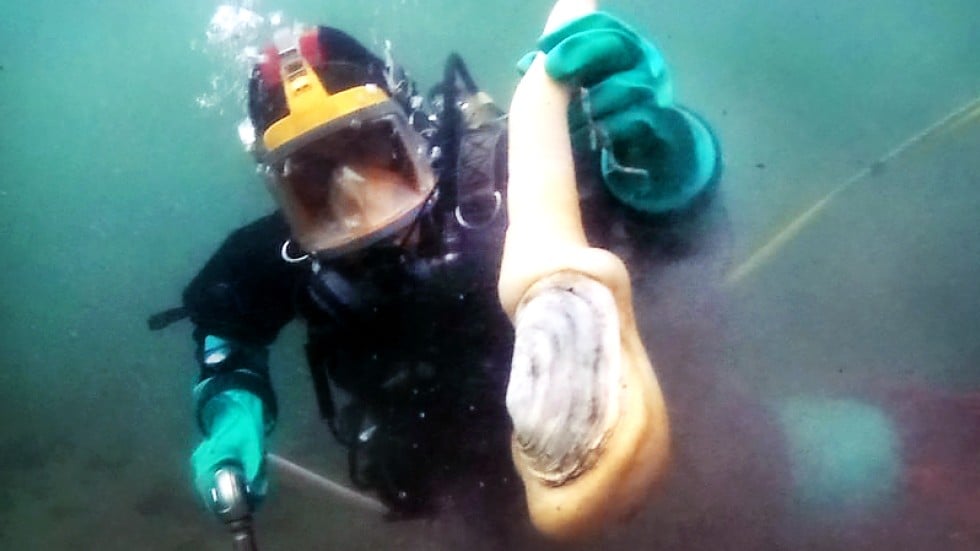
This time they gave us an area with scallops in it. Spindle Rock. The Peapods, Pt Carter. Names dear to our hearts. The restricted designation is actually positive--it means we can harvest and hold the product in our Shoal Bay water for two weeks prior to sale.


This would make a nice placemat
Pinks Forever!!!
Pink scallops were once and pink scallops will again, become one of the quintessential seafoods of our region. Attractive, delicious, rare and spunky, Pinks are maybe the ultimate San Juans seafood product. WA State estimates place the population in the tens of millions of pounds. Pinks are found in limited numbers from Southern California to the Gulf of Alaska, but they exist in harvest-able numbers only in the constricted waterways of the San Juans and Canadian Gulf Islands. Scallops need high water-flows to live in any real numbers. They also only congregate on south-facing rocks and ledges, clinging to rock and each other at times of high tidal flows then detaching to flit around at slack water. They have a unique backwards swimming pattern, wherein they can actually create a jet-like action with the flexible mantle and fire compressed water out the back of their shells. Our tribal dive friends call them "Angel Scallops", others dub them Butterfly Scallops, but Singing Scallops is the name that has stuck. We like Pink because it rhymes with Think. Think Pink. Get it?
Pinks are short lived and fast growing, making them a perfect commercial species. Populations seems to follow a boom-and-bust pattern, as broadcast spawners they are able to reproduce in huge numbers when conditions are ripe. Harvesting, handling and distributing them is very challenging; best abundances are found at depths of 90+ feet in high-flow areas, making for brief, technically difficult dives. Scallops pick up PSP, or red tide, in anomalous patterns--the state DOH has excellent data on red tide in clams and oysters going back to the second world war. It has been decades since any commercially harvested shellfish had any PSP related illnesses. Scallops feed on dormant, or cystic, phytoplankton, so they are liable to pick up toxin any time, any place, and each batch must be tested before sale. Singers also have a very brief shelf-life, so losing a day and a half to testing is a big problem for distributing and serving them. Like all commercial shellfish in Washington they must be held in certified water, of which there is precious little in the San Juans. Every days' harvest is returned to our shellfish farm and held in live-tanks until our PSP tests come back clean. Our scallops' freshness clock doesn't start ticking until we pull them on our end. Scallops received in Seattle on a given day have been out of the water 5-6 hours.
Years back a robust fishery targeted the scallops and Seattle restaurants from the Dahlia Lounge to Le Gourmand featured them and select fishmongers offered them to a hungry public. The fishery tapered off in the late 90's, beginning with the retirement of Jim Ranson, the pioneer scallop diver, low seafood prices and ever-mounting regulations. On a tip from food writer Sara Dickerman, we commenced, seven long years ago to bring singing scallops back to market. Unbeknownst to us, just a few miles across the water in Ferndale, Joe Stephens was making the same efforts. Two years ago we joined forces with Joe. He is now our dive-master and full partner in this venture. Last year we had a short-lived fishery, but between inflexible regulations, flaky divers, boat troubles, PSP and having been given an area with no scallops, we didn't get very far. Now, 9, long, bureaucracy-alligator-wrestling months later, we are back in the PINK! This year our Divers report that populations are at or near their peak in living memory.
Enjoy Yourselves, While We're Still in the Pink.
We are still subject to limitations of flaky divers, boat problems and PSP. Singing Scallops are one of the most challenging foods on the planet to bring to plate, harvesting and handling scallops make truffle hunting look like potato digging, goose-barnacle collecting look like picking strawberries and handling and shipping wild mushrooms look like shipping bales of cotton. This fishery is and will remain a tiny volume, sporadic, ultra-specialty product. For the moment we are the only operator in the business. It is our great pride and delight to bring them to our family of friends and customers. We aim to direct these scallops to markets that will showcase them as the Northwest treasure they are. Look for a string of Pink-Themed restaurant events to come. Call Paisley to schedule your own!! Bringing Pinks back is the result of dozens of people working for seven years to bring this to pass, including many of our customers and we thank everyone. We expect good abundance through Mid-May, after which we trend into PSP season, but again, what with flaky divers, boat problems and dormant PSP-bearing dynoflagulates, we never know.

Pink scallops were once and pink scallops will again, become one of the quintessential seafoods of our region. Attractive, delicious, rare and spunky, Pinks are maybe the ultimate San Juans seafood product. WA State estimates place the population in the tens of millions of pounds. Pinks are found in limited numbers from Southern California to the Gulf of Alaska, but they exist in harvest-able numbers only in the constricted waterways of the San Juans and Canadian Gulf Islands. Scallops need high water-flows to live in any real numbers. They also only congregate on south-facing rocks and ledges, clinging to rock and each other at times of high tidal flows then detaching to flit around at slack water. They have a unique backwards swimming pattern, wherein they can actually create a jet-like action with the flexible mantle and fire compressed water out the back of their shells. Our tribal dive friends call them "Angel Scallops", others dub them Butterfly Scallops, but Singing Scallops is the name that has stuck. We like Pink because it rhymes with Think. Think Pink. Get it?
Pinks are short lived and fast growing, making them a perfect commercial species. Populations seems to follow a boom-and-bust pattern, as broadcast spawners they are able to reproduce in huge numbers when conditions are ripe. Harvesting, handling and distributing them is very challenging; best abundances are found at depths of 90+ feet in high-flow areas, making for brief, technically difficult dives. Scallops pick up PSP, or red tide, in anomalous patterns--the state DOH has excellent data on red tide in clams and oysters going back to the second world war. It has been decades since any commercially harvested shellfish had any PSP related illnesses. Scallops feed on dormant, or cystic, phytoplankton, so they are liable to pick up toxin any time, any place, and each batch must be tested before sale. Singers also have a very brief shelf-life, so losing a day and a half to testing is a big problem for distributing and serving them. Like all commercial shellfish in Washington they must be held in certified water, of which there is precious little in the San Juans. Every days' harvest is returned to our shellfish farm and held in live-tanks until our PSP tests come back clean. Our scallops' freshness clock doesn't start ticking until we pull them on our end. Scallops received in Seattle on a given day have been out of the water 5-6 hours.
Years back a robust fishery targeted the scallops and Seattle restaurants from the Dahlia Lounge to Le Gourmand featured them and select fishmongers offered them to a hungry public. The fishery tapered off in the late 90's, beginning with the retirement of Jim Ranson, the pioneer scallop diver, low seafood prices and ever-mounting regulations. On a tip from food writer Sara Dickerman, we commenced, seven long years ago to bring singing scallops back to market. Unbeknownst to us, just a few miles across the water in Ferndale, Joe Stephens was making the same efforts. Two years ago we joined forces with Joe. He is now our dive-master and full partner in this venture. Last year we had a short-lived fishery, but between inflexible regulations, flaky divers, boat troubles, PSP and having been given an area with no scallops, we didn't get very far. Now, 9, long, bureaucracy-alligator-wrestling months later, we are back in the PINK! This year our Divers report that populations are at or near their peak in living memory.
Enjoy Yourselves, While We're Still in the Pink.
We are still subject to limitations of flaky divers, boat problems and PSP. Singing Scallops are one of the most challenging foods on the planet to bring to plate, harvesting and handling scallops make truffle hunting look like potato digging, goose-barnacle collecting look like picking strawberries and handling and shipping wild mushrooms look like shipping bales of cotton. This fishery is and will remain a tiny volume, sporadic, ultra-specialty product. For the moment we are the only operator in the business. It is our great pride and delight to bring them to our family of friends and customers. We aim to direct these scallops to markets that will showcase them as the Northwest treasure they are. Look for a string of Pink-Themed restaurant events to come. Call Paisley to schedule your own!! Bringing Pinks back is the result of dozens of people working for seven years to bring this to pass, including many of our customers and we thank everyone. We expect good abundance through Mid-May, after which we trend into PSP season, but again, what with flaky divers, boat problems and dormant PSP-bearing dynoflagulates, we never know.

Sunday Dinner at Jones Ranch.
Winter Update From JFF.

Snow Day on Lopez
This winter past has been a tale of limited fishes, heavy weather and immature shellfish--not the stuff of inspired prose. Here at Jones Ranch we have embarked on a pork-intensive diet until the fishes return, entertained ourselves by cutting firewood, playing scrabble, reading vintage science fiction, tormenting the cats and scheming on a fun & fantastic new year.

JFF sells Firewood too.
Sinology Corner.
Chinese New Year is upon us as well. January 27th marked New Years' eve. Festivities begin a week before that and conclude on the 11th of February. This New Year is the year of the Rooster, a year of braggadocio, opportunity and abundant fertility. Joint ventures are at premium, as is strategy over force. In the words of the immortal Sun Tsu. the theme of the year is, “achieve psychological advantage over the adversary and use force only as a last resort." We here at Jones Ranch have sworn off further reproduction for this generation and our cats are fixed, so we will let the livestock and sea creatures multiply while we focus on joint ventures and psyching out the opposition.
Chinese New Year is upon us as well. January 27th marked New Years' eve. Festivities begin a week before that and conclude on the 11th of February. This New Year is the year of the Rooster, a year of braggadocio, opportunity and abundant fertility. Joint ventures are at premium, as is strategy over force. In the words of the immortal Sun Tsu. the theme of the year is, “achieve psychological advantage over the adversary and use force only as a last resort." We here at Jones Ranch have sworn off further reproduction for this generation and our cats are fixed, so we will let the livestock and sea creatures multiply while we focus on joint ventures and psyching out the opposition.
We make an ongoing study of the Chinese market and it's ongoing and unpredictable impacts of seafood pricing. Eating fish on or around the New Year signifies increasing wealth in the year ahead, subject to the following rules according to the website, China Highlights;
- The head should be placed toward distinguished guests or elders, representing respect.
- Diners can enjoy the fish only after the one who faces the fish head eats first.
- The fish shouldn't be moved. The two people who face the head and tail of fish should drink together, as this is considered to have a lucky meaning
This year has been another strange one in market terms--geoducks up, crab down. Duck folk are enjoying the highest pricing in four years so expect a flurry of money spent in the tattoo parlors and flesh-pots of Shelton and Brinnon. Painted Ladies of Mason County; Saddle Up!, Happy Times is Here Again!. Farmed ducks have hit @$28# on the water, up $10# in the last four months. Consider what this means for the larger players in the business; a handful of companies are harvesting a million+#/yr of ducks. Recent events are putting an extra $10 million dollars and more into those already distended pockets. We mention no names, but you can fill in the blanks.
Crab pricing, by contrast, has remained strangely soft and strangely flat throughout. Coastal catches have been very strong, with 20+ million pounds caught between state and tribal fleets. Puget Sound is still tracking for an all-time record catch of 12 million+ pounds for the season. California and Oregon and rolling strong, with a combined 20+ million between the two, to date. Still, 50 million pounds, or 25 million individual crab are but a drop in the food flow for 1.3 billion consumers. To the degree that we any of us here on the West Coast enjoy our local seafoods, it is at the sufferance of the Chinese market. The Chinese market has grown from next to nothing prior to 2009 to being the primary driver in Dungeness pricing. We Coasters are outnumbered, out moneyed and out maneuvered for crab, prawns, shellfish, cukes and more. They send us tilapia and processed calamari and we send them the good stuff. But, on the positive side, these past 10 years the Chinese nation has transferred billions of dollars to our coastal communities and tribes. This is glory of a globalized market, product flows to those willing and able to pay. And if Americans are happy to ship our best product overseas and eat Thai Tiger Prawns and Turkish Branzini, well, more power to us....
But something odd is afoot in China. Duck prices are through the roof, while crab pricing remains low and stable. Other fish prices are level at best. West Coast crab fishers went so far as to strike this last January over a quarter per pound pricing dispute. It will still be a solid year for crabbers, but the boom and bloom is off, at least for the moment. We here at F.O.G. headquarters are confused, but to paraphrase a fish broker of our acquaintance, if we could predict swings in international trade and currency values, we wouldn't be selling frozen pork for a living. As ever, Puget Sound crab is the premiere crab throughout the Sino-Sphere, from Taipei to Hohhot, Puget Sound crab is golden. So we are focusing on drinking with those who face the fish, and letting the market take care of itself. Suffice it to say we have lots of beautiful crab, at a very fair price, for those who dare to dream. As for ducks, well, we can get them, but at a mighty price.... and to all and any, Happy Year of the Rooster. Ducks Up!!!!
Show Me The Money
Halibut Hustings.
Our friends at the International Pacific Halibut Commission released 2017 halibut seasons and catch limits on the 27th of last month. Fishing for our favorite flatfish will kick off March 11 and run 'till November 7th. Coastwide halibut quotas are up 5% to 31.4 million pounds, reflecting a growing biomass, but best of all our local quota is up a full 190,000# to 1,330,000#. As with all things on sea or land, halibut are subject to large swings in abundance. 2017 marks the third successive year of biomass and quota increases. If past patterns hold, we can look forward to up to ten years of further increases.Lummi Love.
Alaska, BC and Coastal Halibut are all well and good, but our joy is the inside-caught fish. Our San Juans halibut feed on spot prawns, pink scallops and have a quality and flavor all their own and vastly superior to your garden-variety halibut. Larger Quotas for our tribal friends mean more fish for you. These past years we have made a tradition of circumnavigating San Juan County on the first day of halibut season. We visit with the fishermen, distribute healthy snacks to our favorites and deliver bait and fuel (and occasionally boots if forgotten at home) as needed. This marks for us the kickoff of our local, fresh fish season. Any and all are invited to join us. Dress warm, RSVP and BYOB.
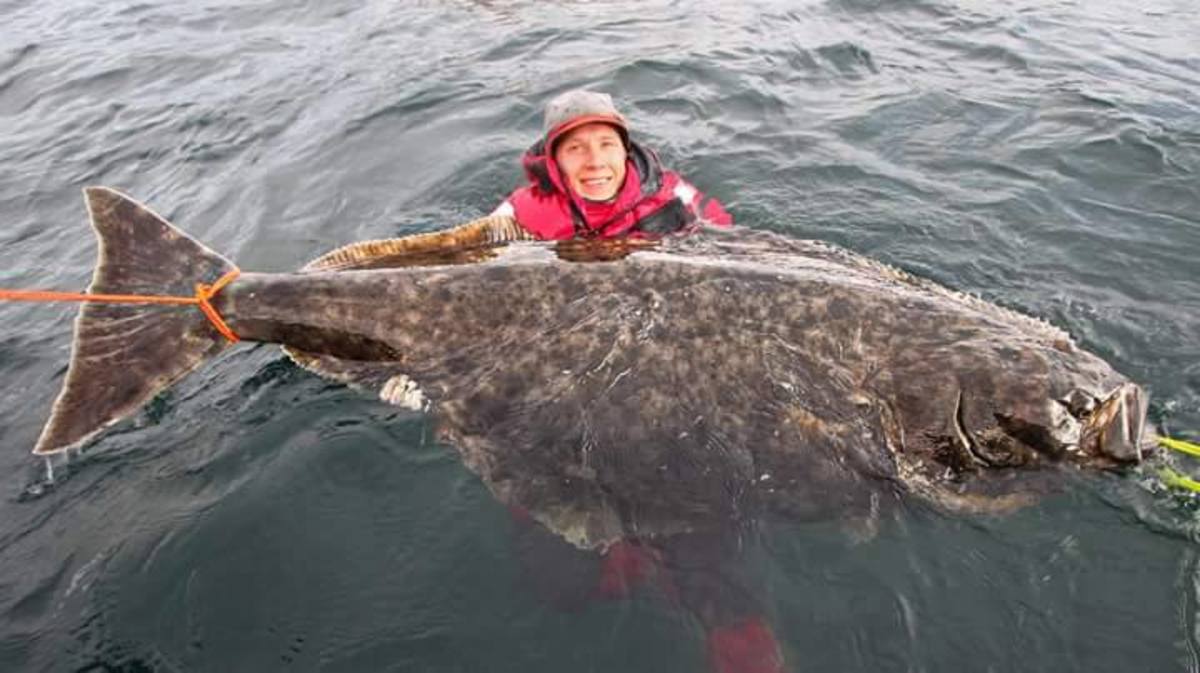
March 11. Mark the date
Look for the roll-out of our new on-line ordering program in the next week or so. This will allow you to place orders and get real-time feedback on availability, quantities and delivery days. The aim is to streamline our process, tighten up information flows and provide late-night ordering options without getting Paisley out of bed.
Until next time, we are your Pink-Procuring, PSP Testing, Firewood Cutting, Rooster Crowing, Crab Bargaining, Halibut Lusting, Local Orbiting JFF Crew.
For customer service please reply to this email or call 360.468.0533


