Pages

Showing posts with label pink scallops. Show all posts

Thursday, March 15, 2018

Fish-O-Gram! Fresh Corvina! Halibut 10 Day Countdown! Divers Got Talent, Illustrated!

Dear March 14th Customers,
This is a week of reflection and anticipation as we prepare ourselves for the oncoming flurry and excitement of halibut season.  Eastern Fishes have been granted a fishing-free reprieve as the Eastern seaboard is slammed by storm after storm.  Local fishes are drying up a bit as everyone pulls back to prepare for halibut.  A bright spot is beautiful Corvina, available whole or filleted.  We do have some lovely whole Petrale from Oregon, as well as Rock, Truecod and Dover.  Also, new this week is Poke grade tuna, suitable for, Poke, we guess.  Pink Scallops roll onward, with excellent abundance and quality.  Hold On! Halibut Is Almost Here.  

Just 10 short days.....

In honor of the Anticipation we have Hold On, by Sam and Dave for the JFF Song of the Week.
https://www.youtube.com/watch? v=Fowldx4hRtI
Milestones.
Our $5 bill is now Stapled to the Bathroom Ceiling.
Fish-O-Gram Hits Seattle.
Yesterday, your Fish-O-Gram correspondent and Mikuni's Kevin Mock were lucky enough to be the first paying customer at the new, super-sized Babirusa yesterday in the formerly Ghetto-Fabulous Kushibar Space (now all cleaned up).  We had drinks and spuds before heading off to an oyster tasting at the White Swan.  Congratulations Charles and Rene, what an achievement! we couldn't be more pleased for you and your crew.  Incidentally, the consensus favorite oyster of last night's White Swan oyster tasting was the Church Pt. from Rivera Shellfish.  The Church Points were full without being overwhelming, with a wonderful finished, polished, texture, a slightly astringent foretaste with a little bit of underripe persimmon.  But the real thing was the finish. A long, lingering, complex but elusive lineup of flavors.  The best comment was that the Church Pts taste like Nostalgia.....

Congratulations Noay and crew!

JFF Product Highlights, 3.14.18.
Corvina, Mexico
Refresh Troll White King, AK
Fresh Whole Petrale, OR
Giant Pacific Octopus, AK
Pink Scallops, Salish Sea
Pacific Oysters, All Shapes and Sizes, Salish Sea.  
Fresh Albacore, Fiji
Time Strapped Chefs Turn Back!!!  Onward to Regular-Form Fish-O-Gram!!!

Like it is Like It Was.

Halibut Dreaming.  
Springtime is in the air...A chef's thoughts turn to a magical flatfish.  These past weeks we have seen increasing availability of Black Cod, true cod and other western delights.  But these are just crumbs, and from a piscine/sales vantage point we are still chugging through deep-winter.  All this changes in 10 short days.  March 24 marks the first day of halibut season coast-wide.  The center of gravity of the halibut fishery, of course is Alaska, with over 17 million pounds of halibut landed.  Canada too is a mighty player in the halibut game, with a 2018 quota of better than 6 million pounds. 
Our Home Seas Grow Mighty Flatfish
Last in line is a tiny Oregon/Washington fishery, with a quota of barely more than a million pounds.  A subset within that subset are the hundred or so thousand pounds of that million caught in the island studded waters of the Salish Sea.  These fish are our March Madness. our glory, and it is our privilege to be the vehicle by which this extraordinary sub-population of fish are transported to a lucky sub-population of chefs. 
Home is Where the Water Flows.

It's the Water...
Salish Sea waters are some of the best flushed, most lively marine waters in the world.  However, the basin also boasts a myriad of small sweet bays where the swirling Pacific currents slow down, warm up, and yield an explosion of marine life, from phytoplankton all the way up.  This unique state of affairs means that everything from the Salish Sea just tastes a little better.  As for the Salish Sea Halibut, they have a sweetness, density and depth of flavor unmatched by any other halibut.  Cut-Out yields on the Salish fish are substantially higher than from Alaska or Washington Coast fishes, shelf-life is superior and the eating experience is unparalleled.  Also, the inside fish enjoy a much higher percentage of the larger 20/40 and 40/60 fish sizes than these other areas. 
A few years back we did a systematic investigation of the stomach contents of these halibut.  We found them stuffed with Spot Prawns and soft Dungeness Crab, explaining definitively why these fish taste so good.
A Flatfish Like No Other.

It's the love...
Commercial harvest from Inside Waters is limited to specific Treaty tribes, namely the three S'Klallam tribes plus the Suquamish, Tulalip, Swinomish, Nooksack and Lummi tribes.  For a handful of soul-stirring days each spring the mosquito fleets of the tribal fishery convert crab boats to longliners to chase halibut.  Most of these folk are year-round fishers and for many of them Halibut is the annual highpoint.  Every fish is individually handled, gutted and iced on board, landed on shore and brought to you as a gift and a blessing.
One of our favorite Crews.

Seeking Good Homes for Extraordinary Fish.
Over the years the vast bulk of these fish have gone into commodities fish outlets--in many cases pawned off as Alaskan fish to a misinformed public.  Starting a few years back, we, and a handful of other small-time fish brokers have steered more and of these fish to appropriate and appreciative markets.  This new order has led to some interesting rumbles on and off the water, but the general trend toward more specific marketing of this fish is very positive.  This year JFF, Lummi Island Wild and Mikuni Wild Harvest have ceased competing, declared a Millennium, and have joined forces to purchase, represent and showcase these peerless fish. 
All Together Now.

Salish Sea Halibut and You.  
Subject to the ever-surprising variables of weather, tribal politics and, of course, the uncertainties of any wild fishery, we expect the first fish in Seattle Sunday Morning the 25th.  Depending on subsequent openings, we are expecting to be flush with local halibut from March 25th through early May. Reserve yours today!  Accept No Substitutes!  

We are Counting on You.
Weekly Pink Scallop Feature.  Lovely, Fluted and Seasonally Appropriate.

Courtesy of Mona Johnson.

Craft Corner. 
Past Fish-O-Grams have generally painted commercial harvest divers, on whom we rely, as a shiftless, substance-loving and heavy users of the criminal justice system.  This is unfair.  Part of this reflected reputation is a relic of the old days in the industry, part of it is intended to be good-humored banter and part of it is, well, true, depending on the makeup of individual divers.  Like every corner of the seafood business, diving does have it's share of desperate characters of varying stripes.  Plus, for those born with dubious impulse control, long-term exposure to compressed air does no good at all.

Outlaws No More.
Mostly, however, commercial harvest divers are dedicated professionals engaged in an extraordinarily taxing profession.  Our scallops divers are wonderful folk, and we salute them.  Joe Littlefield, our top-producing diver, is not just a Dedicated Father, Mighty Hustler and  Superman of the Undersea, he has a whole secret life off the water. 
Tools of the Trade.
Armed with a glue gun, soldering iron, and strips of paper mache, Joe spends his sleepless nights crafting amazing functional artworks.  With his permission, we are delighted to share them with you.  


Until Next Time, We Are Your Corvina Selling, Poke Chopping, Restaurant Opening, Oyster Shucking, Sam and Dave Jamming, Halibut Holding-On, Mikuni/Lummi Wild Partnering, Scallop Extolling, Art Appreciating, JFF Crew.  
Call or Write, We Promise to Write Back!
N&S

Tuesday, December 5, 2017

FISH-O-GRAM #29. Fish-O-Gram!! PINKS TO THE PEOPLE!!! SCALLOPS STORM BACK TO THE PLATE!!! JFF Goes Low on Albacore Loin! Christmas Coho! More Sturgeon! Oyster Of the Month! Razor Clams 2-U. Urchins--Get Them Now! Science Corner--the Echinoidea Edition!!

All Pinked Up in Bellevue!!!  Bake's Place Posts First Scallop Photos of the Season!!


Inline image 2

Pink Scallops Hit Bake's Place in Bellevue! Thank you Nicholas!

Dear Fish-Hounding Customers, 

It just doesn't have to be this way....

Dive Deep, Look Hard.  It's all out there.  
These dark and stormy days call for extra-vigilance in searching for exceptional seafoods.  Some distributors have resigned themselves to Farmed Salmon, Panko-Breaded Ocean Pout and Arkansas Chicken--But you don't need to settle!  We here at Jones Ranch  are hard at work keeping wild and wonderful offerings in front of you.  Pink Scallops are back for the duration, oysters are prime right now and Urchin is well and available.  Look for daily flashes and updates on Sturgeon, Steelhead, Razor Clams and East Coast Fishes.  Also, please consider.....

West Coast Albacore Loin.

We do it funky and pass the savings on to you.

For years one of our favorite products has been the West Coast Albacore.  Fresh season runs from July-September annually and we enjoy, sell, and promote as much of this fish as we can in fresh form.  West Coast Albacore is flavorful, deep and has a much more complex taste than the warm water or Fiji product typically seen in the business.  To us it is one of the true glories of Northwest Seafood, right up there with Pink Scallops, Salmon and Black Cod.

Most of the fish are bled and blast frozen at sea, or FAS, as the industry terminology goes.  This is a terrific thing for the albacore--they do not hold up well fresh, over a few days their flesh goes grey and begins to gap.  The flavor remains, but the fish becomes challenging for center-of-the-plate presentations.   Bled and Blasted Albacore retain the superlative properties of a truly fresh West-Coast Albacore.  
Back in the day, most West Coast product was re-shipped and canned--largely in American Samoa.  In the past few years a new product has developed--a sashimi grade vacuum packed, 100% usable meat loin.  This product is produced by band-sawing the whole fish in sub-zero conditions, trimming skin and bloodline off with grinders and then glazing and vacuum packing the finished loin--all while the fish is still frozen.  The effect of all this is to produce a finished, 100% usable product that has the integrity of a FAS fish--unlike many tuna options, the fish is never thawed.

FAS Albacore loins are good enough to be served raw, and showy enough to be a star center-of-the-plate.  They are MSC certified, the only tuna fishery to earn this distinction--Albacore trolling has effectively no bycatch and the resource is strong and growing. Plus they are extremely convenient-zero waste, zero shrinkage. 
The past few years have seen a down cycle for Albacore fishing in our waters.  The fish have been farther off-shore than usual and our West Coast fleet has struggled to maintain production.  Consequently, pricing on this product has risen year-by-year and the primary producers of the product are always oversold.
We have been offered a volume of these loins at a very nice price.  Our motto here at Jones Ranch is, "We do it funky and pass the savings on to you."  Come and get them!

Christmas Coho.
Inline image 3 
A Rare and Seasonal Beast.


A little known joy of Washington fisheries is the secret run of Coho that trickle in after Chum salmon have been and gone.  Returning in small numbers to rivers throughout the basin, this is an extremely low-volume, Tribal-Only fishery.  The flavor is more subtle than summer/fall coho.  It holds the Coho delicacy and fattiness we all treasure, but with a hint of melancholy mixed in-- a fish to remind us of pleasures behind and pleasures ahead.  Christmas Coho. 

Wild Sturgeon, By and By
https://blogger.googleusercontent.com/img/b/R29vZ2xl/AVvXsEghHAvnhVxiUtb5QBtHNCwnWOn2lvhNVuCaLV-Exm0X02H6nqW3SaYp5YbQZ9fL8kH45qts2V3acVdTiH7RbZkt0UFNr2deCGt7-Ku0mMrPJs0agJuyBZkGyU6FyS4arUQIXAm5XBMV4gnL/s640/big+sturgeon.jpeg
Bit by Bit, we will keep you fed. 

We expect another shot of wild sturgeon for Monday.  Order Now!!! These fish never last long!! Available in 30# average bullets and filet. 

Oyster of the Month
Inline image 2
Congratulations to Miss December!

Our Oyster of the Month for December is the Calm Cove.  A light, supple oyster, the Calm Cove is the Queen of Hood Canal Oysters.  This oyster has slowly grown on us and has become our own Happy Hour Oyster of Choice.  Grown by the same folks as grow the Hammersley, the Calm Cove benefits from the same attention, care and passion.  Beach finished, the Calm Cove is well polished, retains liquor and has an inimitable, quintessentially Hood Canal finish, light and clean but with the rounded depth and richness of a fully finished oyster.  Special Pricing for the Month of December!!

Razor Clams In the House!
https://i.pinimg.com/736x/ab/40/07/ab40072831c46c7f9ae1f8a855c2cf18--clams-alaska-seafood.jpg
Cutting through your winter blues.


Our Coastal Clam Digger friends are taking advantage of the clement weather and low tides this week to make some traction on razor clams.  We expect to have live razors available Thurs/Fri. and for an extended spell thereafter.  

Urchin Update!! 
In spite of last weeks' foul weather, our intrepid divers made it out midweek and we are delighted to have abundant urchin for the end of the week and beginning of next week.  Quotas are winding down and the fleet has voted itself reduced weekly catch limits to feather out the end of the season.  At this point we expect to have urchin through the New Year, but we are definitely on the back side of the season.  In honor of the beginning of the seasonal wind-down of the Mighty Urchin, we have dedicated this weeks' Science Corner to our spiny friends.  The least you can do is dedicate a corner of your menu to this Hometown Hero.  

Science Corner--All Hail the Echinoidea!! 
Inline image 4

A Lovely, Curious Animal.


The Lusty Urchin
Here at Jones Ranch we have a special place in our hearts for Urchins.  Uni is one of our absolute favorite foods, and we anticipate the opening of Urchin season each fall with bated breath and sweaty palms.  We have two commercially-harvested species in these waters.  the Green and the Red.  Worldwide some 950 species creep around the seafloor.  Urchins are to Northwest Cuisine as truffles are to French cookery--the ultimate, ephemeral, essence food.  The edible portion of an urchin is the Uni, or gonads and quality improves through the fall, with the ripening of the gonads.  Sometime in late winter, based on some temperature or environmental cue, the urchins spawn and the uni is spent and no longer desirable.  Urchins have a very long and involved free-swimming larval stage, they can swim for as long as 50 days, during which time the key development is growth of ever-increasing numbers of arms, during which time they feed on microalgae, or phytoplankton.  Eventually they settle and begin life as baby urchins as we know them.  Well-Fed urchin seem to spawn yearly, but success of the spawn, as measured in recruitment of baby urchins is highly iffy--sometimes years and years will pass without successful urchin reproduction, though a year with prime conditions for larval and settler Urchin can yield fantastic numbers of babies.
  
http://www.photomacrography.net/forum/userpix/97_2849urchin800_1.jpg
The promise of Tomorrow.

The Edible Urchin.
We primarily sell urchin live and whole for table-side dismemberment.  We also do offer, from time-to-time, a fresh-shucked uni tubbed in salt water.  Shelf-life on fresh uni is around 5 days in the shell and maybe 10 days tubbed in brine.  Most processors treat uni with alum, which changes the flavor, stiffens up the uni and extends shelf-life to several weeks.  The alum-treated uni is a fine product, flavor-wise, but is different enough from the fresh to qualify as an entirely different thing.  Frozen is even more so. 
Inline image 3
The Real Thing.

The Resilient Urchin.
Uni quality varies wildly year to year, area to area and even among a given group of urchins--this is a major point--inexperienced or heedless divers can pick huge volumes of urchin, but to pick quality product is an art and a science.  Urchins are one of the toughest and most resilient of sea creatures.  Their primary diet is kelp and rooted seaweeds.  They can plow through phenomenal volumes of sea foliage when conditions are right, but when conditions turn against them they can live for years in a sort of fugue state, subsisting on micro-algae and rock.  During these spells the Uni, or urchin gonads become almost non-existent.  When kelp returns they get right back to work, though it is generally a few years before the Uni quality is back up.  Something like this is happening right now in California.  El Nino conditions destroyed kelp beds along vast expanses of California coastline.  The urchins are fine, but their uni is so degraded as to be un-harvestable.  Now, kelp is making a comeback and the California urchin should be back on point in a year or so.  

The Immortal Urchin.
This capacity to go dormant is just one Urchin Fun Fact.  The bulk of living tissue is around the outside of the shell, in a undulating, living skin anchoring and animating the spines along with tens of thousands of tendrils with suction cups.  These suction cups fasten and release to allow the urchin to scuttle along at speed.  They have a unique, five-ways symmetry with 5, 2-fold vascular systems feeding the living skin covering through thousands of pin-prick holes through the shell.  The urchin mouth is suspended at the center of the bottom of the shell in a remarkably mechanical-looking arrangement, and is made up of five self-sharpening teeth.  This is known as an Aristotle's Lantern.  These teeth can chew through rock.  In some areas urchin will excavate little cubbies for themselves out of live rock.  Urchins are highly coveted by predators and are subject to a variety of diseases.  Outside of that, however, urchin have no physiological reason to die.  They do not age or degrade.  Urchin can regenerate themselves indefinitely and as such are theoretically immortal.  

[jaw.jpg]
Aristotle's Lantern. 

The Talented Urchin
Our diver friends tell of urchin behaving like a herd animal far beneath the surface--they move together in coordinated groups.  Experienced divers will target urchins for quality at specific points around the herd--middle of the pack animals tend to be poor.  While Urchin typically haunt the photic zone--the top 8- or so feet of the seabed where macro algae grows, herds of urchin are known to descend to depth to cross to greener pastures on the far side of big water.  Urchins have played a significant role in various forms of applied medicine and science, given their unique, but easily observed properties.  The cutting edge of human longevity research is focused on studying Urchin, and modern In Vitro Fertilization (IVF) techniques developed out of observations of Urchin fertilization, much of which research took place at the Friday Harbor Labs, just across the water from us.
  
https://i.pinimg.com/originals/42/6f/f7/426ff7076830f4647cda0fd460820596.jpg
Otter Eating Urchin.  How the competition does it. 

The Storied Urchin.
Eating urchin was long a staple of Coastal natives and the ever-adventurous Japanese, Urchins were neglected and scorned by Puget Sound settlers and Fisher-Folk.  Fur-trade driven eradication of Sea otters Coast-wide led to a gigantic boom in Urchin abundance.  Urchin in their turn largely eradicated kelp forests.  This is the reality that pioneer-era water-folk experienced in Puget Sound.  Then in the late 1960s something odd happened.  As Japan pulled itself out of it's post-war wreckage and began to become rich, a desire for traditional foods pushed Japanese buyers to alien shores.  Early urchin fishers used rakes and dip nets along with some disastrous attempts at dragging for urchins.  Then eager trainees in the new discipline of SCUBA diving figured out that there was money to be made in prancing along the sea floor, picking up urchins, in tandem with this, kelp beds came roaring back, fueling another boom in urchin abundance.  By the mid-80s the urchin boom was in full swing, with bonanza volumes and pricing.  Maine has a robust urchin fishery, as does Atlantic Canada.  On this coast California has always been the center of gravity for Uni production, with a small fishery in Oregon, a robust resource in Puget Sound and fitful production in Canada and Alaska.  This was an exclusively export-oriented business with huge money.  Your Fish-O-Gram correspondent remembers when urchin divers were the high-rollers and big-spenders of the San Juans fisher-folk.  Then the Japanese economy crashed in tandem with a down-tick in the resource.  For twenty years or so the urchin fishery settled down to a low murmur, with a handful of die-hard divers plugging away at very low prices.  Quotas were never filled, instead the fishery would taper off late winter when the urchin spawning began, and in Puget Sound the tribal quota was fished little if at all.  During this spell a robust domestic market gradually developed.  Starting with sushi bars and spreading ever-outward in the fancy food world, West Coast Uni is now primarily consumed domestically.  

The Coveted Urchin.  
Inline image 4
Onward to the Middle Kingdom.

These last four years urchin pricing has roughly doubled, one year to the next.  Divers are now making real money for the first time in decades.  Puget Sound Quotas are now fully subscribed, both for state-licensed and tribal fishers.  California production has slowed at precisely the moment Uni has gone mainstream.  We are delighted to see Urchin get the acclaim and menu space it deserves.  Looking forward we expect decent abundance through mid-January, mostly from tribal boats.  Urchin are the ultimate distillation of the Salish Sea, their variations and inconsistency an endless pageant.  Even their fickle nature makes part of their appeal--urchin refuse to adapt to living in tanks--when we or others try to hold urchin in tanks, even with abundant kelp for food, the uni quality degrades within a matter of days.   Right now the Salish Sea is well stocked with harvest-size urchin and from our perspective, the uni has never been better.  Looking ahead, our divers report that recruitment has been poor these past few years, indicating lean years ahead--this is strictly cyclical, not indicative of any long-term trends--they will be back.   Alaska urchin fisheries have collapsed with the resurgence of Sea Otters, as have California urchin fisheries in otter-colonized areas.  As such, we expect urchin to become ever more precious, expensive and sought-after. Further, Chinese buyers are now getting in on the action.  China has zeroed in on Urchins in the same way China now hoovers up fine cognac and prime beef--Uni is now identified a prime luxury food from the West.  Several new Chinese -owned brokerages have set up shop in Seattle recently with the notion of mass-exporting reds.  This new trade route will be in full swing by next year and will likely put a serious hurt on local urchin supply channels.  Right now, urchins are readily available, quality is phenomenal and pricing is still reasonable.  Salish Sea/Puget Sound Urchin is as good as it has ever been, and will ever be.  These are the days when......

Oyster Tasting December 5 Franks Oyster House.
Inline image 7

Please join us Tuesday at Franks Oyster House for an oyster/scallop tasting.  5 pm 'till the bivalves are gone.  
Until next time, we are your Scallop Friending, Chicken-Eschewing, Albacore Hounding, Calm-Cove Shucking, Christmas-Coho-ing, Ugly-Fish Cutting, Urchin Researching, JFF Crew. CALL OR WRITE TODAY!!!

N&S

Friday, November 17, 2017

Fish-O-Gram #28--Holiday Schedule. The Harmful Algae Blooms Edition. Greenies are A-OK!! A Flood of Spot Prawns!! Crab prices hit low point for 2017!! Pink Scallop Countdown!! Oyster tasting at Franks, December 5.

Dear Storm-Lashed Customers, 


https://kxro.files.wordpress.com/2012/10/pg43.jpg
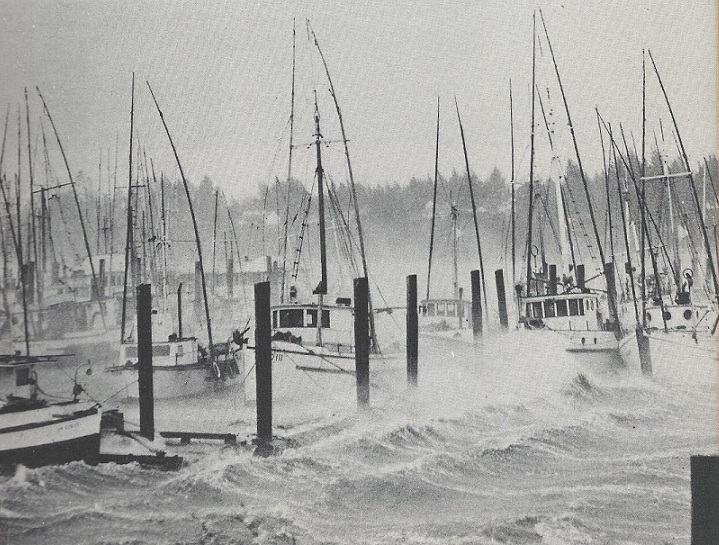
Meanwhile down at the docks.

Holiday Schedule. No Deliveries Thursday or Friday (Nor on Weekend).

SEATTLE DELIVERIES- Monday, Tuesday and Wednesday. Closed Th & F. 

SAN JUAN ISLAND DELIVERIES- Tuesday ONLY.

SKAGIT DELIVERIES- Monday Only. 

BELLINGHAM DELIVERIES- Wednesday Only. 

OUT OF AREA SHIPMENTS- Monday shipping Only for urchin/crab. Fresh/Frozen Fish & shellfish shipping Mon-Wed.  

It's going to be a good winter.....
Fall is now officially the mode of the day on the water and at Jones Ranch.  Coho is definitively done--the last few we have seen have been nasty and snaky--bruise-colored flesh and thin belly walls.  Best to let them spawn at this point.  Halibut has been relegated to memory and frozen product.  From here on 'till mid March West Coast Fish availability will be subject to weather, limited as far as species availability and generally squirrely.  Fortunately, JFF has been diving and digging deep and far afield to keep you covered.  Urchin fisheries continue strong and the urchins themselves are beyond lovely.  Remember--every blow this time of year works to stretch out the urchin quota.  Spot Prawns are suddenly, unaccountably, exploding out of the woodwork.  Eastern fisheries are robust and varied, with good abundance of John Dory, Monk and various exotic offerings.  Best of all, we are now on the one-week countdown to renewed Pink Scallop harvest and sales!!

Inline image 4
Back on Point

Green is the New Uni!!!
We have not sold green urchins the last few years due to concerns about quality and consistency.  The reds seem to be going from strength to strength, year by year, quality-wise, while the greens have lagged behind.  Based on a batch we sampled last week, we are delighted to report that the greenies are back on.  Green Urchin uni is sweeter, smoother and milder than red.  We consider it a "gateway" Uni--perfect for gentler palates and new Uni-eaters.  So from here on out, Green, as well as Red, means Uni.

Inline image 1
Travis and friend.  

Crab Pricing Falls to 2017 Low!!!!
California Coastal crab opened Weds and we expect volume to be excellent.  Crab pricing has fallen to the lowest levels in 2017.  Washington and Oregon Coasts are held up due to low meat yields in test catches, but overall abundance looks excellent and when those fisheries open, prepare for a crustacean deluge.  Here in Puget Sound our tribal fleets are banging away with the best catches being in the San Juan Islands.  State crabbers will likely go back on the water around the holidays.  What this means is a unique combination of abundant supply and moderate pricing.  Now is the season to run a crab program.   As ever, unlike the broadliner competition, we specialize in Puget Sound Crab, the Acme of Dungeness Crab.

Spot Prawn Bonanza!

Inline image 1
Prawn-O-Rama!

After years of poor and fitful spot prawn availability and extremely high pricing, we now have an abundance of high-quality frozen prawn tail options.  We have size-graded 2016 product for excellent prices, O/R 2017 production at reasonable prices and size-graded 2017 tails for acceptable prices.  Your choice!.   Some of our fussiest customers have been delighted with the 2016 and are buying large volumes to secure availability.  The frozen-in-brine prodcut pictured is the finest retail pack we have ever seen.  Check the pricelist--Don't let the best prawns in the world slip by!

Prepare for the Pink-Out!!!
Inline image 2
The Scallop Fishery is almost in Hand

Pink Scallops are Almost Back!!
It's almost time to welcome back the elusive princess of your seafood menu, the legendary Pink or Singing Scallop.  The extreme seasonality of the scallop only makes them more precious in our minds, but there again is a story to be told.
After a barn-burning spring of scallop harvest and sales, things came to a screeching halt in mid-June as PSP, or red tide levels hit dangerous levels.  Since then the Scallops in our storage system have stubbornly held onto PSP levels oscillating just around the danger zone.  It has been deeply frustrating.  This week we finally realized a safe test result on both our storage-held scallops and product fresh from the harvest grounds.  Assuming we get clean results come Monday, we are back in the scallop business.  Given the holiday, figure first deliveries the week of the 27th.  Long-time Fish-O-Gram readers understand the epic struggle that bringing the scallop fishery back on line has been.  Every scallop harvested and sold is a victory and a triumph--a triumph for culinary endeavor and the human spirit over the nightmare molasses of fish bureaucracies.  But the creature that has bedeviled us these past months is not on the government payroll.

http://www.fis.com/fis/worldnews/images/51345_345x275_72_DPI_0.jpg 
I don't work for the City, I don't work for the State
.

Science Corner, HAB Edition.
We here at Jones Ranch have become fascinated by Biotoxin-producing algae.  After all, we have a positive relationship with phytoplankton in general.  We grow it at the shellfish hatchery for our baby oysters, wild algae is the fodder that grows our oysters and feeds the salmon we treasure.  The magically-named Noctiluca scintillans (translation: twinking night light) creates the phosphorescence, or fire in the water that is the joy of night-time seagoers world wide.
Algae is the building block of life in the watery reaches of the world and it supplies 80% of the oxygen we consume and is by far the largest driver in global carbon cycles--this is fascinating topic, by the by.  Our third child grows algae in jars on the kitchen table. 

Inline image 3
We love Algae


When Algae Goes Bad....
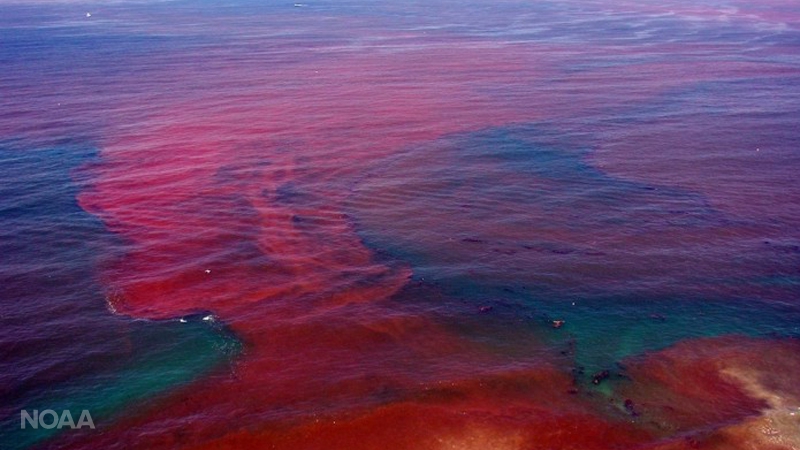
F.O.G. would go so far as to claim an affinity with and affection for phytoplankton that most people have with puppies or sloths.  How then to consider algae turned bad? Harmful Algal Blooms, or HABs as they are known in the business, cause massive harm--from the potentially fatal Paralytic Shellfish Poisoning to the hazards of Domoic Acid, caused by blooms of Pseudo-nitzschia phytoplanktonto the newly emerged threat of DSP, or Diaretic Shellfish Poisoning, which is at is sounds.  HABs cause huge disruptions in seafood supply--though generally blooms are not generally harmful to lower-order marine organisms.  Plankton-eating shellfish and some species of fish and crab concentrate the compounds.  When these creatures are in turn eaten by animals with central nervous systems, like otters, whales and humans, trouble arises.  Otters in particular seem to be subject to heavy mortality from eating tainted clams.  

Beware the Birds.
Some impacts from HABs are downright whimsical, Nitzschia navis-varingica can cause temporary amnesia in humans and animals, or Amnesic Shellfish poisoning.  Alfred Hitchcock drew from a real-life invasion of confused, belligerent seabirds in Capitola California in 1961, presumably caused by a Nitzschia navis-varingicabloom in nearby waters, to flesh out the horror film, "The Birds"  More recently, a deranged Pelican flew through the windshield of a motorist on the Pacific Coast Highway in 2006.  Accident investigators fingered AmnesicShellfish poisoning as the aggravating factor.  Washington State Department of Health has monitored for HABs since the early 1940s and the program has developed into the best and strongest in the nation.  Yet for all the resources dedicated to identifying HABs and mitigating their impacts on humans and seafood supply, remarkably little is known about the whys and wherefores--there seems to be no good reason for plankton to create toxins--it is costly to the organism and does not seem to benefit the algae, and yet a wide range of them do.  Some toxic algae, like Pseudo-nitzschia, turn their toxin-producing capabilities on and off based on unknown environmental or biological cues.  At times plankton monitoring will identify huge abundance of Pseudo-nitzschia with little or no toxin being produced.  Others species, like Alexandrium catenella, the PSP, or saxitoxin producing algae, are always on--when present, they are producing PSP toxin.  Because producing toxin is so costly to the algae, species producing toxins are generally very narrowly adapted.  This is good in one sense, as they are not fit to compete with the general run of phytoplankton, and so blooms are rare.  But when conditions line up, the harmful species have the capacity to explode in abundance and dominate the ecosystem for a period of time.  The best operating theory is that these particular species of algae were, sometime in the dim genetic past, colonized and co-opted by toxin-producing viruses.  

Different species of shellfish concentrate, clear and hold the toxin at vastly different rates.  Mussels are typically the fastest to accumulate toxin and the quickest to release it.  Because of this sensitivity, mussels are typically used as the sample species to monitor PSP.  Butter clams and geoducks are the slowest both to take up toxin and then to release it--a geoduck farmer friend some years back faced a full year of harvest closure.  His ducks went hot in mid-spring one year, stayed mildly hot through the summer months, then went into dormancy without clearing the toxin.  Jerry Borchert, PSP guru for the DOH, speculates that different species have various degrees of "stickiness" for saxitoxin in gut lining and soft tissue.  And our geoduck friend?  After a year with no revenue his business more or less collapsed.  Taylor Shellfish took over his leases and last we heard he was renovating and flipping houses in Tucson Arizona.

https://www.gannett-cdn.com/-mm-/91a8864ed495f9a350b8c371ad444aabd4fe92b4/c=0-0-1600-1200&r=x404&c=534x401/local/-/media/2017/09/12/Shreveport/B9329284331Z.1_20170912163906_000_GP4JKJEV3.1-0.jpg 
The long-term impacts of PSP

Biotoxins are always with us.  
Harmful algaes are nothing new.  Coastal dwellers have known of toxic algae, and known that it concentrates in filter feeders, as long as people have lived on the coast.  Local natives would feed suspect shellfish to dogs before consuming it themselves.  San Juan County herbalist and folklorist Ryan Drum tells a story of a feast sometime in the early dawn of European contact wherein Vancouver Island natives deliberately fed toxic mussels to Spanish fur traders, with predictable results.  Biotoxins are not all bad, the Japanese have used Pseudo-nitzschia derived compounds as wormers for millennia.  Modern medicine is finding all kinds of uses for these compounds, including as highly effective treatment for anal fissures.  Both the range and frequency of toxic algal blooms seems to be increasing.  This may be a result of warming seas, nutrient loading, better tracking and detection, some form of cyclical variation, or all of the above.  Some years in Puget Sound are bad biotoxin years, some are not.  The last few years have been quite benign, though we did have an unexpected spike in this last October.

https://cdn.arstechnica.net/wp-content/uploads/2017/04/1372.jpeg 
Same as it ever was


Scallops and PSP.
The primary tool WA DOH uses to monitor PSP outbreaks is a robust predictive model based on 70 years of testing and tracking PSP outbreaks.  If X area turns up hot, more than likely area Y will follow.  Areas typically prone to PSP are monitored regularly during weather conditions generally associated with Alexandrium blooms.  What this means in practical terms is that if Chuckanut and Mackaye Harbor turn up hot, Jerry Borchert will begin rounding up samples from the next tier of sites, say Eastound, Olga and Shoal Bay.  This system works very well.  Washington State commercial shellfish has been remarkably safe for many decades, in spite of increasing seasonal and geographical occurrence of HABs.  The particular glory of   Alexandrium  is an uncommonly strong swimming ability--therefore they flourish in times of striated water conditions, with limited mixing between water layers.  When upper layers of water become depleted of nutrients other, less mobile plankton fade out.  Alexandrium are able to swim down to deeper water, tank up on nutrients, then hoist themselves back up to bask in the sunlight.  They typically thrive in areas of clean, clear water with high salinity--this is why the Straits frontage of the Olympic Peninsula is so prone to shellfish closures.  Contrary to popular belief, Alexandrium are not more common in heavily polluted areas—the areas in our state most prone to outbreaks actually have the cleanest water.  When conditions turn less favorable for the Alexandrium, large numbers of the algae will cocoon themselves and form dormant cysts that can live on the seabed for years or decades.  Ultimately, when conditions warrant,  the algae react to some unknown cue,  break out of their cyst, swim to the surface and begin merrily photosynthesising, dividing and creating toxin as if they'd never quit.  Many algae species have a cystic cycle-this is what the vast biomass of deep-water filter feeders subsist on, and there is no way to predict when and how deep-water feeders will come upon a batch of cystic Alexandrium.  DOH's predictive models are of little use in tracking PSP levels in deep-water species like scallops.  Further, DOH had very little data on how and with what speed scallops uptake the toxin and how and with what speed they release it.   

https://microbewiki.kenyon.edu/images/thumb/3/3d/V43n2-anderson3en.jpg/200px-V43n2-anderson3en.jpg
It's the quiet ones you need to watch out for. 

JFF, Expanding the Boundaries of Human Knowledge.
The old-time scallop fishery foundered on this problem--every harvest batch needs to be tested.  A scallop with an effective shelf life of three or four days cannot be harvested, held out of the water for the duration of a test and then delivered to market with any degree of success.  Our process is that harvested scallops are transferred to our holding system and held in water while the test is going through.  Being held in our growing area means no surprises--This allows us to ship guaranteed fresh and guaranteed clean scallops.  Our thinking going into this exercise was that hot scallops transferred into the tanks, as happened last June, would rapidly purge themselves of saxitoxin, given the high metabolism of a swimming scallop.  Unfortunately, this proved not to be the case.  Scallops have proven to take up the toxin faster than mussels and release it more slowly than almost any other creature.  Certain weeks side-by-side testing showed no detectable toxin in mussels while at the same time PSP levels in the scallops were spiking.  This is wonderfully interesting from a research perspective, but frustrating from a commercial point of view.  Moving forward we are going to begin using a pregnancy-checker-esque PSP test as a pre-screen for scallops to help us target harvest and reduce the strain on the DOH lab, not to mention the lab mouse population.  This too will be deeply interesting.

Red means what?

Scallops to the Rescue!!!
So bust out your pink party hats, whip up some mignonette and pour another glass of sancerre.  The scallops, safe, certified and island-fresh are headed to your menus.  Just in time for the holidays and just in time to relieve the seasonal-seafood doldrums.  It's going to be a good winter.  New customers; please take a moment to check out our archive of Scallop-themed information and the excellent roster of press about the return of the scallop fishery at our website, jffarms.com.

As for Jerry Borchert, Audrey Coyne, Clara Hard and the other good folk involved with the DOH biotoxin program, who have an unparalleled record for keeping diners safe while enabling the Washington State Shellfish industry to grow and thrive, JFF salutes you. 

And for those of you who enjoy harvesting your own, yes, the advisories are for real and also apply to gooseneck barnacles.  Recent years have seen dramatic increases in the number of Rainier-Swilling hipsters on culinary safari prying barnacles off the South End of Lopez.  Here at Jones Ranch we are deeply concerned about this from a public health perspective.  There is no current DOH testing of barnacles, nor is there any data we can find on their PSP uptake and retention properties.  All real food involves risk, but pushing the biotoxin  envelope is not a wise move.  We confine our barnacle eating to deep winter months for these reasons.

https://pbs.twimg.com/profile_images/818218901/hipstersafari.jpg 
Be safe. Lay off the barnacles. 


Please join us for an oyster and pink scallop tasting event at Franks Oyster House 5-8pm December 5!!!! 
Inline image 5

In our expanded capacity as Marinelli Shellfish Reps we will be holding as many of these vents as we can find venues to do so in coming months.  Please reach out if you would like to host one.  

The last event, at the White Swan Public House was a storming success, as was Elliot's Oyster New Year last weekend.  We are delighted to report that the Hammersley, our November Oyster of the Month, swept the prize board at Oyster New Year.  Congratulations Troy Morris and the entire Calm Cove crew!!!!!!

Until next time we are your Green Urchin-Cracking, Freezer-Diving, Scallop-Sciencing, Safely-Barnacle Harvesting, Award-Winning Oyster-Selling JFF Crew!
Call, Email or text. 


Nick & Sara