Pages

Showing posts with label crab. Show all posts

Wednesday, January 17, 2018

Dear Un-Prohibited Customers,

https://i0.wp.com/shakestirmuddle.com/wp-content/uploads/2016/02/jan-16-1919-prohibition-begins-usa-506x270.jpg?fit=506%2C270&ssl=1

Silly Laws Create Creative Outcomes. 
Ninety-eight years ago Nebraska today ratified the 18th amendment to the Constitution, pushing it over the top and outlawing the manufacture, sale and consumption of alcohol.   Washington State had already banned alcohol, both through "local option" laws and a 1918 "Bone Dry" statewide measure.  San Juan County had gone dry some years prior, following a visit from famed evangelist Billy Sunday.  In San Juan County, alcohol was illegal between 1911 and 1933.  Banning hootch was a dreadfully earnest endeavor, the notion being that boozy fathers would buck up and spend their times and money on family rather than swilling rotgut and pinching barmaids.  The reality of course was nowhere near the ideal.  Folks drank just the same but the liquor trade went underground.
San Juan County, being a boundary county between puritanical, dry American soil and a decadent and licentious Canada, became a hub for bootlegging and rum running in these years.  Islanders of that era were a web-footed bunch, many of them growing up on and around the water, and those who took to to smuggling did so as ducks take to water.  Early smugglers started with row and sailboats, and quickly moved onto more and more powerful motorboats.  


Let the Games begin.

Billy Wilson and the Black Pup.
Coast Guard and other law-enforcement agencies did their best, but local knowledge of these twisting waterways and the profit motive generally won out over  under-powered Federales.  For many years the primary enforcement boat in the Islands was the steam powered Scout, nicknamed the "Black Pup", with a top speed of 6 knots--about the speed of a well designed rowboat.  Billy Wilson, a farmer, blacksmith, bootlegger, smuggler and former owner of Jones Ranch, did some hard time in the McNeil Island Penitentiary for smuggling during those years.  He and his crew got caught hauling whiskey from Vancouver Island to Lopez and stashing the goods in various barns on the extreme South End of the island.  


Stately but slow. 

Lessons Learned.
As students of history and avid drinkers ourselves, we view Prohibition through the lens of the ongoing American push-pull between High-Minded Totalitarianism and Reality, with the entrepreneurial and unscrupulous ever-willing to rush into the breach.  Perhaps the greatest lesson of prohibition is that a state that chooses to criminalize normal behavior effectively normalizes criminal behavior, with all sorts of nasty long-term consequences.  Above all, despite any madness any government can throw at us, prohibition is an object lesson in how the human spirit, and the desire for alcohol, always triumphs.  This tension plays out to this day.  In local terms, prohibition was a glorious canvas on which people played out games of intrigue, gain and risk.  Prohibition also marked a high point in Island prosperity.  For Billy Wilson and the boys, the good times came to a crashing halt on December 5, 1933 with passage of the 21st amendment, repealing the 19th amendment.   After his release his former associates gave him 40 acres on Iceberg Point--one of the most beautiful places on earth- in gratitude for not squealing.  Billy Wilson spent his latter days brewing and drinking his own, working the dying trade of blacksmithing and raising sheep, including a purebred flock on his Iceberg Place.  We treasure the last few buildings standing from his era, and maintain a large and growing collection of Billy Wilson artifacts, including agate marbles, various hand-forged tools, and a full selection of horseshoes.  We do our best to carry on in his place and in his name. 
Billy Wilson, JFF Salutes You!  Never let local, state or federal governments get between you and your tipple of choice!

Inline image 2 

Wedding day at Jones Ranch, 1915.  

Crab Troubles.
The long-awaited West-Coast Dungeness opener has opened with a whisper, and not a bang.  The headline Washington Coast, Oregon and Central/Northern California Crab seasons all finally opened on Monday, following a prolonged wait for the meat percentage to reach acceptable levels.  Typically these fisheries open in early-mid December, in time to maximize holiday sales.  Southern California has been turning out a few crab, as has the ongoing Puget Sound fishery, but catches have been slow and pricing high.Crabbers are afraid that dropping millions of pounds of product on a soft market will crash pricing.  The big boy processors have been firing up their freezers to take the expected onslaught of product, but given the timing of this all, the offer prices are low compared to the past few years.  Southern California has been turning out a few crab, as has the ongoing Puget Sound fishery, but catches have been slow and pricing high.  Now the marquee fisheries are open, but the weather has kicked up and the crabbers are semi-striking.  So pricing is still awfully high, though extremely volatile, and crab brokers are running the thinnest of inventories in order not to get hurt when the volume finally hits and the price does tumble.  Troubled times in crab world..... order and we'll do our level best. Stay tuned for updates!!

Scallops.
Eating Pink Scallops is one of the best things about being human.  Our ancestors ate grubs and bashed each other with sticks so that a blessed few of their descendants could prance around on the seafloor scooping up scallops and the rest of us could enjoy Deep-water treats for the first time in human history.  If you are not currently serving them, why not? 

Inline image 3 


Courtesy of Erik Johnson Photography.

Urchin Bonus Round.
The state quota has been definitively thumped, but our Swinomish and Lummi friends are now hacking away at the tribal quota on urchin.  Between storms and other fisheries, urchin supply is fitful, but any urchin after the first of the year is a gift.  The urchins are getting closer to spawning--watch for white extrusions from the uni.  JFF is firmly convinced that Uni is on a one-way track to culinary glory, that urchins are the Puget Sound version of Truffles, caviar, or, well, Puget Sound Salmon, Pink Scallops and more, but in a punchier formulation.  We eat uni at every chance.  You should too. 

https://i0.wp.com/upload.wikimedia.org/wikipedia/commons/2/2e/Strongylocentrotus_franciscanus.jpg 
It's 2018 and still swingin'.

White King and Farewell to A King of Our Hearts and Plates.  

https://static.seattletimes.com/wp-content/uploads/2017/10/10042017_rowley_123528-780x520.jpg

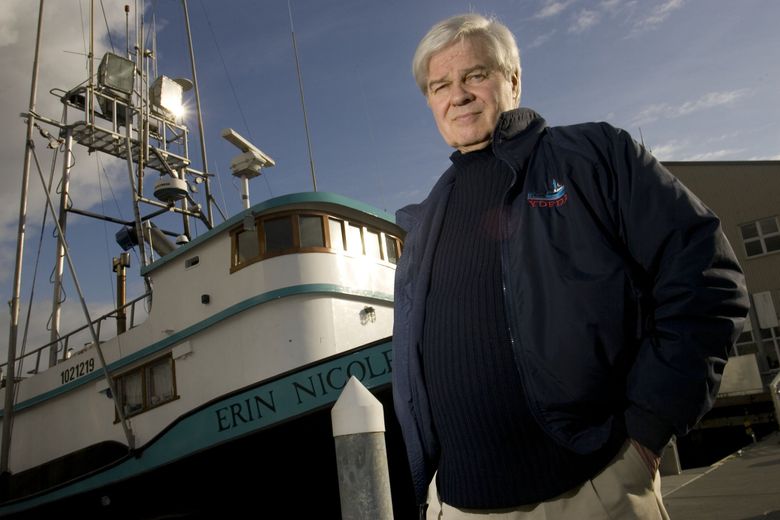
Some months back Jon Rowley, a man we are proud to claim as a mentor, cheerleader, and friend succumbed to kidney disease.  Jon defines an era of Northwest seafood and the development of a Seattle-Specific culinary sensibility like no-one else.  He drove and  embodied the change from a volume, commodities-driven fishery to the joyful, quality focused and and sustainable fishery we enjoy and celebrate today.  All of us today in the business who aspire to do anything worthwhile are Standing on the Shoulders of Giants, namely Jon.  Those interested in Jon may find more information in a handful of excellent articles profiling Jon, includinghttps://www.seattletimes.com/pacific-nw-magazine/jon-rowley-promotes-the-tastes-we-come-to-crave/.
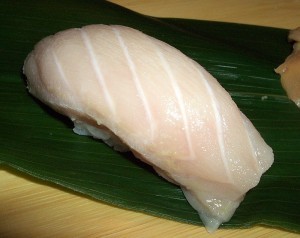
Sunday, greater Seattle gathered to mourn his passing.  Yesterday a smaller group gathered to enjoy a meal in his spirit.  We were lucky enough to furnish the salmon for this meal-- spectacular FAS Queen Charlotte Islands Ivory King Salmon.  Last night we enjoyed Kevin Davis' version of this fish, prepared for Jon Rowley's memorial dinner.  The fish is everything we could have hoped for, and a fully fitting for Jon's farewell meal. The most special of fish for the special-est of people.  We have a limited volume of this fish available as frozen or refresh, H&G or fillet.  Don't let these fish slip away without offering them on your plate!

http://78.media.tumblr.com/tumblr_l80pn9Ix3X1qcyka1.jpg 
The best of the best.

Diatoms to the Rescue. 
While the rest of the nation labors under snow and storm, we West Coasters have been enjoying an uncommonly sunny winter, reminiscent of dimly remembered Washington winters of the early 1980s.   At Jones Ranch this means the winter grain is shooting up and the elderberries are leafing out.   At the shellfish farm we have seen the first algae of the season, the slimy, ground-swelling chain diatoms.  This is about three weeks earlier than usual.  What this means is that algae eaters, including oysters, are getting an unexpected gift of food and flavor-boost.  To you, this means that all Washington oysters are developing the high, glory flavors of early spring early this year.  We can already discern the high, lingering flavors of spring in the animals.  It has been a long, long time since we have seen an early spring here.  Every winter puts northern folk to the test and every spring is a gift and a joy, whether it comes in January or in April.  Here's to the oysters, here's to the weather, here's to the single celled photosynthesizing critters who make it all happen.  

Algae Eaters, and Eaters of Algae Eaters, give thanks.  

JFF list Highlights 1.16.18.  
Pink Scallops, FAS Ivory King, Nisqually Oysters, Monkfish, John Dory, Giant Pacifc Octo,                            Lopez Island Smelt, Quinault Steelhead, AK Spot Prawns, OR, Brine Packed.    


Until Next Time, we are your Bone-Dry-Voting, Proudly-Tippling, Black Pup-Dodging, Crab-Troubling, Scallop-Extolling, Uchin-Encore-ing, Rowley-Waking, Oyster-Loving, Plankton-Identifying, JFF Crew.

N&S

Call or write! We promise to write back, especially if you place an order!

Monday, October 31, 2016

Fish-O-Gram, The Octo Edition, Crab Closures, Crab Openings, Diving Tragedy

 http://doseng.org/uploads/posts/2010-11/1290736268_doseng.org_podborka_06.jpg 
Fall Plowing at Jones Ranch.  She Can Help With the Rock Picking.


Dear Rock-Picking Customers,

Another October week past and now the holiday season is almost upon us.  We here at Jones Ranch have been scrambling to get last minute dry-season work done.  We have been preparing a field for fall planting to triticale and hay grasses. This marks the fourth time we have worked this ground since plowing the sod back in 2012.  This process has been slowed by the rain and the incredible number of rocks to pick.  It is extremely productive dirt, but the rock harvest is like something out of a fable involving dragons teeth, lusty maidens and a magic fountain.  From 25 acres we have picked ten dump truck loads of rocks and every pass of the disk brings up more.  The topsoil on this place is only maybe 14" deep and it is hard to figure out where the rocks keep coming from.  Previous plowers left a stadium-sized rock pile in the woods.  Lopez is blessed with abundant rocks.  This is likely part of what drew the mostly Scotch-Irish farmer/settler folk to the island, lo these 150 some years ago--it reminded them of their own rock-bound homeland.  This particular spot was known as the Maulsbey Place and until the mid-1960's had a small cabin in the middle of it.  This cabin, after a few moves, is now situated in Lopez Village and serves as a vacation rental.  
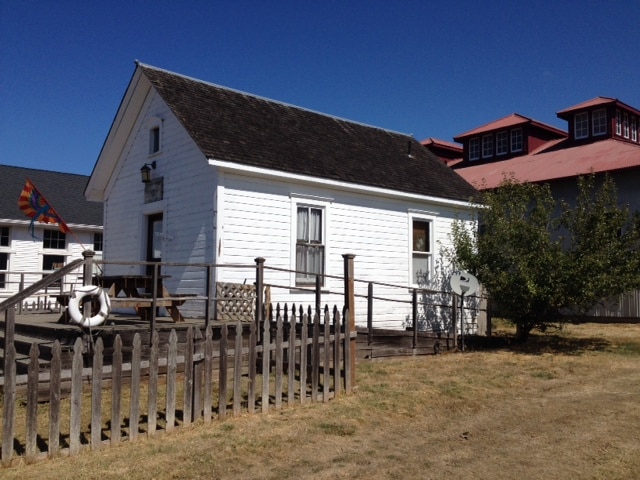
https://a2.muscache.com/ac/pictures/95457231/ad48cf57_original.jpg?interpolation=lanczos-none&size=large_cover&output-format=jpg&output-quality=70 
No Rocks, No Chickens.  Nice Place to Stay.

Every spring we go and pick daffodils on the old house site, now that we have worked the ground the daffodils have divided and spread a bit, so a patch that was a tight 50' radius is now a scattered 200' strip.  The last resident of the cabin before it was moved was an elderly firewood cutter from the steamboat days.  Before the petroleum age, the mosquito fleet boats that served the islands ran on wood-fired steam power and burnt a phenomenal amount of firewood.  Folks throughout the region made their living cutting the gnarled, old growth island timber for steamer fuel.  This particular character ran a steam-powered stationary buzz saw set up on the East side of the island.  Oxen dragged logs to the saw, where they were bucked into four foot lengths and split with black powder splitting guns.  The principle was to load a powder charge into a bifurcated wedge that looked a little like a shoe-horn, drive it into the end of a 4' length of wood, then detonate the charge.  When this worked it neatly split the round into manageable-sized chunks.  When it didn't, it could fire the whole works of out of the log with explosive force.  We remember any number of elderly San Juan Islanders with nasty scars and missing finger digits from splitting gun accidents.  After the steamboat days ended firewood cutters switched to supplying the lime kilns on San Juan and Orcas with cordwood for cooking lime.  Firewood cutters in those days had only to stack up wood along the shoreline.  Sooner or later a steamer or kiln barge would come snuggle up to the bank on a rising tide and put all hands to work chucking cordwood aboard.  

Our older farmer friends recall this man linking out his well deserved retirement in a two-roomed homestead shack along with a few hundred chickens, who lived with him in the cabin, a wallet full of antique cash money from the steamboat days, and an ever-present jug of rot gut whiskey. 

https://blogger.googleusercontent.com/img/b/R29vZ2xl/AVvXsEhVdxb-zwXBs8vfDr9kauMcKpaWw5P7TG-897hg4U34GI5M2C6LnYhwbXggNDOtX_7CTVoE33eAPs2-oP372Dqh_RbjxIL1yKhdnL7vTViFtQ0tkE3YqlbRFPHlERBU5ZUmSyaxUblFEUBi/s1600/bstm-013-unkn(beaver).jpg
I'd Rather be Drinking and Raising Chickens

Some of the rocks are quite beautiful.  We have picked any number of pinkish, semi-translucent chunks of what appears to be granite.  We are also seeing a great number of metamorphic rocks, and what appears to be shale. They are of a surprisingly uniform size, most of them just about the size of a man's head. Our science knowledge here at Jones Ranch tends more to biology than geology, and the rocks are pretty well caked with  mud, but beyond the novelty aspect of the volume of rocks, the exercise has whetted our appetite to know more about the mysterious source of the endless rocks.  Are they working their way up from the clay subsoil layer?  And they being dropped by giant, night-flying birds?  Are our neighbors salting the fields for the fun of seeing us sweat? In any case, we are doing our best to get the field done and planted before the soggy season fully shuts us out, but we will see.  Here's hoping for a nice dry spell!

http://www.thenewsite.thewatershedproject.org/wordpress2/wp-content/uploads/2014/08/octopus2.png  
Alert! Octo Shortage!

Much to our shock and horror, we have found ourselves octo-less this last week or so.  Giant Pacific Octo has long been our most stable and consistent product, when fresh fish falters, this eager freezer friend has seen us, and many of you, through.  All of our regular sources have come up dry, actually some of our sources have been calling us for product.  This is unexpected, given the huge volumes of octo generally floating around.  As ever, when faced with a seafood supply question, the F.O.G. Truth Troops swung into action.  Our octopus is by-catch in the Alaska cod fishery.  Most of this comes from federally managed waters, all waters more than three miles off the coast, and the balance comes from Alaska State waters.  Octo are caught in the cod longline, cod pot and cod jig fisheries, as well as in crab and drag fisheries.  Catches range from 500,000#/yr- 2,000,000#/yr.  Most of the catch is sold for bait--Octo is the best bottom-fish bait there is.  Tentacles hold on hooks better than anything, and most bottom fish have a great, unrequited love for Octopus.  Octo are delicious, highly intelligent and wily.  The average cod or halibut has little chance of eating Octopus in any kind of fair fight.  The rest of the Octo catch is sold for food, mostly to the Iberian countries.  We peel off a goodly chunk for our friends and neighbors.  Octo is our children's favorite lunch meat-cook off one Octo and you have meat for a week for a family of six.

Big Eight-Armed, Three-Hearted Monster--An Animal Like No Other.

http://wiki.nurserylive.com/uploads/default/original/1X/f426cef93ac36ac9a2aad3d514805eee6c6b086d.jpg

Octopi are the most advanced members of the mollusk family.   They are direct relations to clams, oysters and scallops.

Over 300 species of octopus haunt salt waters world-wide and are heavily targeted by fisheries throughout most of their range.  The common Octopus, the most widely distributed species, is targeted by Spanish draggers working the Sahara Banks off Western Africa.  This fishery yields 100 million plus pounds per year, animals that are not available for local folk.  In many parts of the world octopi are caught by divers squirting bleach into caves-  when the choking, blinded animal darts out the diver bags it.  From a sustainability and fairness perspective, non-American Octo needs to be considered with a very jaundiced eye. 

Globally the catch for all species is around 800 million pounds per year.   This represents a huge increase over the past few decades.  Like coyotes, white-tailed deer and starlings, Octopi are thriving in the Anthropocene.  Their short life-cycle, prolific breeding and opportunistic feeding makes them uniquely well suited to modern times.  One signature Octo trick is the ability to open crab and lobster pots and pull out the catch.  Unlike Lopez-style crab poachers, the Octo neither close the pots back up, nor leave a beer for the disappointed crabber.  On these shores targeted commercial fisheries have been conducted with strings of small plastic pots.  The idea is that the creatures take up housekeeping in the pots, then hold fast while the pots are being pulled to the surface. 

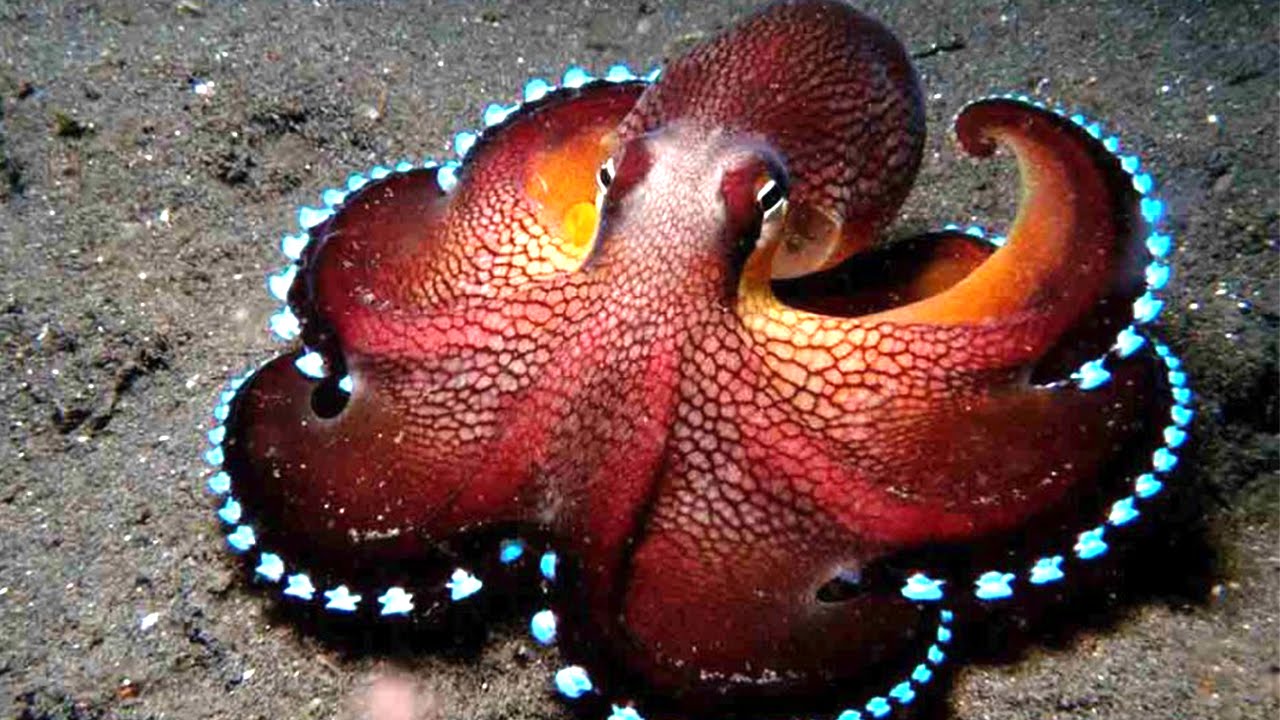
Octo typically live in fairly shallow waters--200 meters or less, though they can live deeper if they like.  Their primary diet is crustaceans and shellfish.  Octo can grow almost as fast as food is available, under ideal conditions they'd eat 30% of their body weight per day.  If food becomes scarce they can hold at very low levels of metabolism.  With eight wriggling arms Octo can overwhelm just about any prey unable to swim fast enough to get away and the hard beak of an octopus can crack through just about any shell.  They also have a mild venom with which to subdue prey.  Octopi have three hearts, an extremely efficient gill arrangement inside their body cavity--the Octo can pulse water through its gills to maximize oxygen assimilation, and they can direct absorb oxygen through their skin and into the blood stream.  Octopi can change color at will, and have remarkable abilities to regulate their bodies at wildly varying depth-related pressures.  Octopi learn faster than human children, usually they need be shown a function, like unscrewing a lidded jar with food inside, only once to achieve mastery.  Octopi have been proven to use tools, build houses, and exhibit long-term memory. 

The Biggest Octopus Lives in F.O.G Home Waters.  Or Does it?

http://i.marketingprofs.com/assets/images/opinions/kraken-blog.jpg 
What a Terrifying Animal.

The Giant Pacific Octopus, our favorite species, ranges from So-Cal to the Korean Sea.  The world record specimen weighed in at 600# and had a tentacle span of 30 feet.  Old-time Nordic fishermen and whalers spoke of a much larger Octo, known as the Kraken.  So vivid and numerous were the descriptions that Linnaeus included the Kraken, dubbed Microcosmus marinus in the first edition of his Systema Naturae (1735), a taxonomic classification of living organisms.   This animal was large enough that mariners mistook them for islands and the whirlpools from submerging Kraken were strong enough to founder ships.  Fishermen tried to find and follow the Kraken because of the huge schools of fish that followed them around.  They were not actively hostile to humans, but would opportunistically eat drowning fishermen.  Existence of the Kraken, like that of most sea monsters, has never been completely debunked. 

Albert Tennyson was so taken by the notion of the Kraken he immortalized it in a sonnet, entitled, imaginatively, "Kraken"

Below the thunders of the upper deep;
Far far beneath in the abysmal sea,
His ancient, dreamless, uninvaded sleep
The Kraken sleepeth: faintest sunlights flee
About his shadowy sides; above him swell
Huge sponges of millennial growth and height;
And far away into the sickly light,
From many a wondrous grot and secret cell
Unnumber'd and enormous polypi
Winnow with giant arms the slumbering green.
There hath he lain for ages, and will lie
Battening upon huge seaworms in his sleep,
Until the latter fire shall heat the deep;
Then once by man and angels to be seen,
In roaring he shall rise and on the surface die.

Octo-Apeasement.


http://www.eud.eu/files/7614/5751/4801/eu_parliament_building_20121016145758.jpg 
Home of the Eurocrat. Soft on Cuttlefish.  Hard on Taxpayers.

Octopus are extremely well-represented in literature and culture, we have been fascinated by them for as long as we have known of them.  They also have a remarkable ability to inspire sympathy in humans, here in Puget Sound our targeted Octopus fishery has been closed for 20 some years.  Local populations are extremely robust, but tender-hearted WDF&W staff closed the fishery for sentimental reasons--the man currently in charge has a soft spot for the wily creatures.  Our urchin diver is the same way.  One of his hard and fast rules for harvest divers is no harming the Octopi.
A few years ago the European Commission found time to issue a string of regulations regarding treatment of Cephalopods.  Science experiments involving Octo, Squid and Cuttlefish must be "ethically evaluated", the emotional impact of experiments considered, and animals must be anesthetized before being cut on.  So a cuttlefish is considered the moral equivalent of a chimp or dog, at least according to Brussels, and miss-treating them a felony.  Look for a flowering of Octopi research in the newly-liberated Britain.

Why aren't they in charge?

It's only a matter of time
In most ways octopi are superior to human beings.  They function, learn and live like high-order animals but reproduce like crab or fruit flies.  After all, opposable thumbs are nothing on an animal with eight, independent, highly motile arms with suction cups.  One female giant pacific octopus can lay and hatch up to 100,000 eggs.  They can befuddle prey and predators with clouds of concealing ink.  In theory, they are fully capable of developing technology to allow them to breathe on land.  Had they done so, epochs back, we might be the ones cowering in caves while our eight-legged overlords strode the land, breathing through some sort of oxygenated water bubble tank.  So, why aren't the Octo in charge?  At the very least, why do they not rule their watery dominion as humans rule terra firma?  Why do they not herd the flatfish from grazing ground to grazing ground,, like the Masai do cattle or the Sami do reindeer, why do Octo not build rock castles in the watery deep?  Imagine if humans had to negotiate with the Octopi for the rights to drive piles, run underwater power lines, or fish a certain area. 

Fatal Flaws; The Blood Will Tell.

http://www.anacortesnow.com/images/stories/2009-0719_images_of_anacortes4-big.jpg 
90 Seconds Was All it Took

But for a few developmental, social and physiological flaws, Octopi might well be in charge.  Firstly, their broad and slithering bodies use a phenomenal amount of oxygen.  This is why Octopi can absorb oxygen through their skin and their gills--the gills simply can't keep up.  Octopus blood is copper based, as opposed to our iron based blood.  Copper blood is more efficient than iron-based blood at conducting oxygen in low-oxygen, cold-water conditions, but it limits octopus to short bursts of intense activity, rather than the sustained exertion that iron-based blood can support.  Applied to land creatures, scientists say that copper-based blood could not support even a sheep at rest.  Octopus actually have gigantic, blood-filled sinuses as blood reservoirs to flush oxygen to their extremities for brief periods of exertion.  So Octo need to be very conservative with their expenditures of energy.  A favorite public spectacle in post-war Puget Sound was Octopus Wrestling.  Some exhibitions attracted as many as 5000 people to watch divers wrestle full-grown Octopi.  For about 90 seconds a mature Octo can dominate the strongest of men.  Once their blood oxygen is exhausted, the Octopus goes flaccid.  In extreme cases, an Octopus can kill itself by exertion.  On the seafloor, an Octo will generally not stray far from their den or cave.  This need to be ever-close to shelter is a major impediment to any dream of World, or even Sea, domination.  But Octos have a deeper flaw. 

Co-operation Makes the Man. 

https://static01.nyt.com/images/2011/02/18/nyregion/CITYROOM-BRIDGE2/CITYROOM-BRIDGE2-blog480.jpg          
Octopi Lack Unity.

Octopus are fairly short-lived--Giant Pacifics rarely live longer than five years and most smaller species are much shorter-lived.  Both males and females die in the breeding process.  Males shortly after intercourse and females shortly after the eggs hatch.  So young Octopi do not get the benefit of any parental instruction.  Once hatched they are cast to the tides to find their own first meals and a cranny to hide in.  This makes development of any material or political culture very difficult.  Even worse, Octopi are not gregarious--in fact, they are highly territorial and will drive away or kill any incoming youngsters seeking a foothold.  This is one of the reasons cave-pots are an effective fishing method--there is a constant exodus of Octo desperate for a cave to call home and an unclaimed territory. For the moment, the anti-social tendencies of Octopus hold them down.

Alien Invaders.

https://i.ytimg.com/vi/IVBomVchu3U/maxresdefault.jpg 
This Doesn't Look Like an Earth Creature

The newly sequenced genome of Octopus, Squid and Cuttlefish reveal a genetic structure so different from other animals and marine life as to be effectively alien.  The real shocker turns out to be that Octos have an enormous number of protein coding genes--33,000 in total, far more than humans do. What this means is that Octopi can change tissue cell function with a speed unseen in any other known living creature.  This is why Octopi can learn so fast--they can permanently re-program their neural tissue almost instantly.  Apparently the octopus genome is enriched in transposons, or “jumping genes,” which can rearrange themselves on the genome.  With this kind of firepower, it stands to reason that Octopi can and will overcome their biological and social limitations at some point. 

Giant Pacific Octopus and You.

Seattle is now in the throes of an Octo-Drought.  One explanation is that the vageries of catch, demand, international markets and such have temporarily conspired to leave us bereft.  The other is that catch is down because the Octo are learning from their mistakes and are plotting some sort of counter-strike.  This is a deeply troubling prospect, and F.O.G. will be keeping a keen eye on the situation.  We are currently scouring the news wires for any strange, potentially Octo-Related manifestations, like unexplained disappearances of fishing boats, unusual numbers of crab and cod pots coming up open and empty, or trawl bags cut open, raids on shore-side military depots or thefts of weaponry or tools and any evidence of deep-sea fortifications being constructed.    Octopi are merciless, venom-packing predators unconcerned with Trigger Warnings and Micro-Aggressions and an Octo-Dominated future would likely be very rough on Seattle-Style progressive values.  Clearly, our Cuttlefish-Coddling  European "allies" are unfit to address the brewing threat.  The future depends on us!

http://i0.wp.com/orma.com/wp-content/uploads/octopus-squid-beak.jpg 
We Are All Getting Octo Beak Cufflinks.

Octo 2-U.

In the interim, the JFF rolodex has paid out and we expect a shipment of frozen Octo from a cod fisherman in Dutch Harbor in the next 10 days.  These FAS Octo will be round, or uncleaned, and correspondingly cheaper than our typical offerings.  We here at Jones Ranch are deeply excited about dissecting a Three-Hearted Animal.  Other bonuses of a whole animal will be Octopus ink, a tasty pasta supplement, and Octopus beaks, which make fine jewelry and talismens.  In the interim, we would offer our cleaned Rhode Island T&T as a substitute.  Stay away from imported Octo, stay alert and stay tuned.

Crab Changes. 

As of Friday the 28th, our state-licensed crab fleet is off the water, following a whirlwind 28-day season during which they caught almost 2 million pounds.  This has been a phenomenal start to the season and we have every reason to expect this will be, as predicted, the all-time record Puget Sound crab season.  Saturday and Sunday the lower-sound tribes opened in Skagit Bay, and there may be a few additional openers around the edges before the Lummis fire up in our waters, likely around the 7th or thereabouts.  Our Crab tanks are full and we should bridge the gap with no troubles.  Prices are likely to firm up some, but hopefully nothing dramatic.  On the Coast the Quinault Nation will fire off sometime mid-November.  Washington State-Licensed, Oregon and California fisheries will soon follow.  Pricing will oscillate with these changes, but expect slow and steady increases towards the holiday season, a brief lull, then the real price spikes will come as we head into Chinese New Year and the tapering off of catches coast-wide. 

Other Fishes.

http://www.pewtrusts.org/~/media/legacy/uploadedimages/peg/newsroom/opinion_editorials/eosablackseabass776lwjpg.jpg
Rhode Island Black Sea Bass kicks off Tuesday.  Tautog are still episodically available.  Halibut is on the home stretch.  Halibut season closes November 7th and the quota is down to 500,000#.   Mahi is limited, warm water Albacore is pricey, but generally available, Blackcod is fairly consistent depending on weather, as is rockfish.  Call your certified Fish Expert today!

Tragedy at Lummi.

F.O.G. is saddened to report the death at sea of Lummi Harvest Diver Hank William Hoskins Sr.  He was diving for cukes and urchins off Sucia Island Wednesday, the 26th of October when his air supply hose was severed by the support boat.  Hank did not have any backup air, and drowned.  We did not know Hank, nor buy his product, but everyone in the harvest community feels the loss of anyone on the water.  It is a timely reminder of the risks water people take to supply us with seafood.  Hank was 40 years old and a family man.  Please join us in holding the Hoskins family in thought and prayer.  We are ever-mindful of Walter Scott's admonition; "It's no Fish Ye're Buying, it's Men's Lives".


Until next time, we are your Rock Picking, History Buffing, Extremely Co-Operative, Tough on Octo, T&T Substituting, Diver Mourning, JFF Crew.


For customer service please reply to this email for Sara 
and Paisley at sales@jffarms.com

Monday, October 17, 2016

FIsh-O-Gram, Local Crab Bonanza!! Caviar Returns! Dive Fisheries Update!! Fresh King Crab!!


Dear Crab-Crazed Customers,
http://dearpaleo.com/wp-content/uploads/2012/02/DearPaleo_crabs.jpgHere They Are!!!
This past October 1st our tribal and state-licensed friends kicked off another regular Dungeness crab season.  The tribes fished through October 8th, then pulled off the water, while the state fleet will keep going for another couple of weeks.  Waterfronts in Bellingham, Anacortes, Port Angeles and Blaine are thumping and bumping, and millions of dollars are changing hands.  As usual for this time of year, we are seeing the nicest, largest, fattest crab and the lowest pricing of the season.  This years' abundant sunshine has triggered a boom throughout the food chain here.  The crab, and by extension, you, are reaping the benefits of those glorious sunny days. Coastal crabbing will begin opening in about a month, Puget Sound crab catches will taper off and pricing will rise towards the holiday season.  Like everything else in our blessed waters, Puget Sound crab are something special.  They grow and play in some of the most dynamic waters in the world, massive tidal exchanges coupled with the warmth, richness and biological productivity of all the little bays around the region.  Our inside-waters crab are fatter, tastier and more vigorous than other populations of Dungeness.  Chinese buyers have become the largest buyers of local crab--most restaurant crab consumed in the Seattle market is coastal crab, silently swapped out for our superior animals.  These few weeks in mid-fall are the best time to showcase Puget Sound Crab. 
State of the Resource.  
http://wdfw.wa.gov/fishing/commercial/crab/pugetsound/graphics/crabregions.jpgWhere the Magic Happens 
Years back the Puget Sound crab fishery was a biological backwater and economic afterthought, a minor detail compared to the then-mighty salmon fishery.  The long-term average catches generally swung between 2-3 million pounds per year.  Sport fishers took roughly 1 million of these pounds, with the balance caught by state licensed commercial crabbers.  Prices were fairly low, and there was not much of a differentiation in the market between Coastal and inside crab.  Beginning in the early nineties a series of biological, management and economic changes flipped everything around to where now, Puget Sound Crab is the largest wild fishery by value in the inside waters.  First to change was a series of WDFW salmon management changes that had a disastrous impact on Puget Sound Coho and King salmon stocks.  Following this, crab catches began to steadily ratchet upwards, by 250,000-500,000# per year.  Next was the Rafeedie Decision in 1995.  This decision extended the principle of 50% resource sharing between state and tribal fleets from salmon to all marine resources, including crab.  Tribal catches of crab exploded from a few hundred thousand pound in 1994 to over 2 million pounds in 1995--contributing to an overall catch of over six million pounds--twice the long-term average.  Since then the resource has gone from strength to strength.  Last year total Puget Sound harvest was over 11 million pounds and this year looks to be better yet.  The other big changes are that WDFW has been steadily transferring crab quota from the commercial fleet to recreational users and, beginning in the mid-2000's, Chinese demand began driving the price ever upward.   Last years' catch was worth upwards of 40 million dollars, not counting sport catches.  Salmon catches and pricing has crashed over this period.  For Puget Sound Fisher-Folk, Crab is now King.  So boomtimes for our tribal friends, and even for the state licensed fishers.  Despite losing half the resource to the tribes, then half again to the sports, state commercial catches, in pounds are twice what they were just 20 years ago and income to the fleet is up 8-fold in that time.  State crab permits have risen in value from $5000 in 1995 to $150,000 today.  
http://www.recruit757.com/wp-content/uploads/2014/08/IMG_9596.jpgIt's not just a White Man's game anymore. 
Primary Production Will Tell
Humans generally target mid-upper level representatives of the marine foodchain.  Here in Washington we eat Shrimp, Crab, Salmon, Shellfish, Halibut, various other Bottomfish, and once in a while, a few Smelt or Herring.  We tend to track abundance in these species as if they are indicators of overall biological health or productivity.  But the drivers of all this, the phytoplankton that feast on sunlight and dissolved nutrients, spring eternal.  A terrific example of this is the Newfoundland Cod Fishery.  Everybody knows the story of the Cod Collapse.  But a much less-told tale is that Snow Crab and Lobster boomed with the cod gone.  The principle is simple--primary productivity will burn on and something, anything, will convert it to increasingly complex, and tasty, life forms.  So ups and downs in one species or another are a guaranteed windfall for something else.  Primary production is not only unstoppable, it is actually increasing these days as higher atmospheric carbon levels make for more plant food.  Add in a string of sunny summers as we have been having and the sky's the limit.  Here at Jones Ranch Shellfish Division, we see and feel the ups and downs of primary production in how the oysters grow.  We see a huge difference in oyster growth between sunny and overcast years.  Again, these past year have been phenomenal.  Another marker of the incredible productivity of our waters is the biomass of pink scallops and other filter feeders, including a massive population of geoducks, at low depths.  Literally hundreds of millions or billions of pounds of hungry bivalves haunt the floors of Puget Sound.  Their only diet is dormant, or cystic phytoplankton.  So, after everything up top gets done feeding, there is still enough plankton left over to sift down and feed this gigantic deep-water biomass. 
http://www.marinephytoplankton.org/wp-content/uploads/2015/04/Phytoplankton.jpgCan't nobody stop the plankton.
Trump, Puget Sound Crab and You.
In this election season, buying, serving and singing our local crab is the least a local patriot can do.  Last week F.O.G. was appalled to see a flagship downtown restaurant triumphantly advertise Oregon Coast Dungeness, as if it was a selling point, not a measure of shame.  In this fleeting moment of large crab, big numbers and low prices, nobody has an excuse for serving out-of-bioregion crab.  That would be like voting for, well, you know........
http://www.lanternpress.com/amzn/image/ps0/41393One Crab, One Vote.
Caviar returns to a Hungry City
http://i.imgur.com/NXwnEp3.jpgBreakfast at Jones Ranch
Jff Is delighted to announce the first Salmon Caviar, or Ikura shipment of the season.  This year our caviar is exta-fine, coming as it does from Unalakleet Alaska, a small Native city on the banks of the Unalakleet river in far Western Alaska.  Chum salmon are netted by skiffs in the river, speedily dressed and the roe processed into golden Ikura.  Alaska pink and chum salmon catches were well below forecasts this year and stocks of #1 ikura are extremely short this year.  Availability will be spotty and we will run out.  Get your name on a tub now! 
http://www.nomefix.com/wp-content/uploads/2016/08/unalakleet-alaska.jpgBest Caviar is found where the river bends.
Dive Fisheries Update.  
We here at Jones Ranch love our dive products maybe above all other things.  Part of this, surely, is the ever-elusive nature of divers and the resources they pursue.  It just wouldn't be the same if we had dive products at our fingertips, Cucumbers and Urchins would likely become an object of familiarity and mild contempt like tilapia filets. 
No fear of that happening.  This year so far has been a study in deferred gratification on everything dive-caught.  From Cukes to Urchins to Pink Scallops, nothing has been straightforward this year.  First, both State and Tribal cuke season fired off on August 1 with a slightly reduced cucumber quota.  The state fleet thumped almost their entire quota in 6 short weeks.  Meanwhile the tribal divers set themselves a reasonable weekly individual quota to spread their fishery out, then promptly closed it to go crabbing.  On Urchins the State divers chose to open greens but delay reds 'til late November.  Early catches of greens have tested at middling roe percentages, meaning export buyers are lukewarm on them.  As of now we are waiting on voting results from the state fleet as to whether or not to go to weekly individual weight restrictions and open reds again.  
The tribes opened both reds and greens on September 23, but then closed again for crab season.  The tribes are also new to the urchin fishery and there is a substantial learning curve to picking good urchin.  Overall this year on quality, we have been pleased but not overwhelmed and we have also seen some early stress-spawning on the greens.  Our inside waters are still quite warm and this is likely keeping the urchins from putting on that last little polish.  They are due to cool substantially over this weekend with the incoming storm systems.  
Pink Scallops are still in DOH limbo as they drag their feet on opening an area with commercial quantities of product. So, order away on Cukes and Urchins, but don't get into any life-threatening situations counting on product availability.  Incidentally we have been playing with cukes these last weeks in the Jones Ranch test kitchen.   Look for recipe hints in upcoming Fish-O-Grams.  
http://i.imgur.com/Qf0xVYt.jpgAll we can promise is that we'll keep trying. 
Fresh King Crab Again.
http://a57.foxnews.com/global.fncstatic.com/static/managed/img/876/493/askalar332545543543.jpg?ve=1&tl=1Once a Year.  Expect Frosty Shells
Alaska Red and Blue King Crab seasons fire off October 15 and we expect the first fresh product on the 18th.  This is a special program put together by one of our favorite figures in the West Coast seafood business.  This gentleman has been in the business a very long time, been extremely successful and now focuses on specific fun projects.  Only a tiny fraction of the catch goes out fresh--98% is cooked and frozen for ease of handling.  Our crab is captured, brought into King Cove, cooked, then dunked into the brine-freeze tank until the shell freezes but the meat does not, then pulled and  packed in 32# cases.  This process allows for distance transportation in a fresh state.  When they arrive at your cantina, merely pop them in salted, boiling water for a few minutes and wow customers and staff alike.  Again, frost on the shells is a desirable condition, and one that has a lot of science behind it.  
The 2016 quota has been cut substantially.  Prices will be higher than last year and the season will be short this year, though we may end up being lucky on this front--our friend may hold some crab live in King Cove to stretch the fresh season out 'till Thanksgiving, because he himself wants some for his own dinner.  
Until next time, we are your Puget Sound Crab Chauvenist, Vodka Swilling, Cucumber Boiling, King Crab Frosting, JFF Crew.  Dedicated to bringing you the best, most quintessential Northwest Sea-to-Table and Farm-to-Table Protein Specialties.