Pages

Showing posts with label lopez island. Show all posts

Wednesday, February 21, 2018

Fish-O-Gram #32! Nor'Easter Hits! Urchin YES! Winter Surprise! Black Cod Resurfaces! Oysters Approach Annual Prime! F.O.G. Government Affairs Desk--Lobsters Rejoice--Switzerland Outlaws Live Boils! Mandates Hamster Socialization!

Dear Storm-Lashed Customers
Sunday Evening at Jones (Shellfish) Ranch.  

Wizard Of Oz Time. 
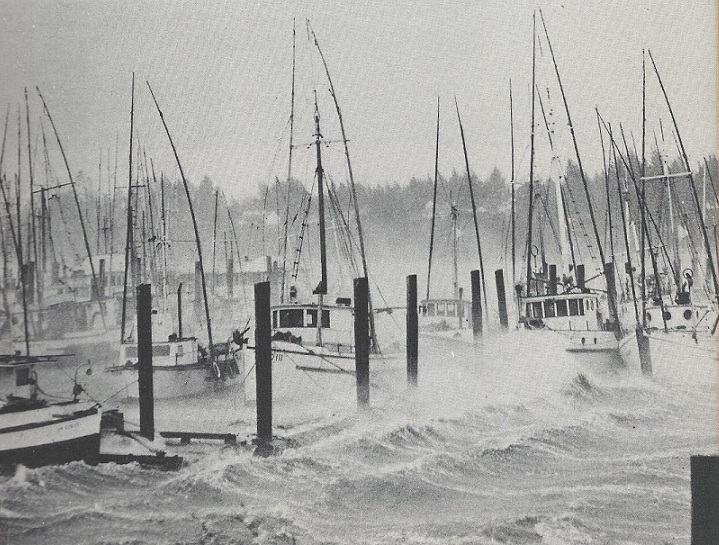
These latter days at Jones Ranch have been frosty and wind-swept.  We thought we were in line for an early spring but we were wrong.  Sunday's blow knocked oyster tanks off of cribbing, scattered trays and plumbing supplies, smashed up our small boat fleet and launched a 20' long drying rack a couple of hundred feet in the air.  Nor'Easters are a legendary and feared force in the San Juan Islands.  Cold air comes roaring down the Fraser River Valley and blasts the islands--really bad Nor'Easters are rare, but when they come the results can be apocalyptic.  In deep winter the ground is generally saturated with water.  A hard freeze limits the elasticity of tree roots and heaves the water-saturated ground.  In the right conditions trees can come down like Pixie-Stix.  One story from way back concerns a Lopez Island pioneer Bat Clancy.  Bat owned a forty acre tract of old-growth timber across from his house.  He steadfastly refused to log his forest, long after old growth had been scalped from the rest of the island.  Melvin Graham, neighbor and County Commissioner at the time approached Bat one more time to ask about logging the parcel--Bat's trees were shading one of Melvin's fields and making it impossible to cure hay on a wide swath of the field.  Bat Again refused.  That next winter a Nor'Easter came up and laid down every stick on that forty acres.  So Melvin got his sunshine, Bat got a lifetime supply of firewood and planted a small orchard in the middle of his formerly-treed 40.  Decades later we leased   Melvin's field from his daughter and the resurgent forest on what had been Bat's 40 shaded the southern portion of field to the point that curing hay was next to impossible.  Plus ca change....
 Inline image 4


A Platter Named  Desire....Pink Scallop Photo of the week.  Note the Olys snuggled in the ice....

Inline image 5

Courtesy of Louis Morales, Pioneer Square Taylor Shellfish Bar
Winter Surprise at Jones Ranch!
Inline image 9

Early Springers.

Precocious Goats
Some weeks ago, while feeding the goats on a normal January day we came upon a freshly born goat kid.  In the days following we welcomed another 50 more.  This was a surprise of several fronts, normally we schedule goat breeding in order to produce goat kids in late March or early April-once spring grasses are fully on and available.  This past year we put the buck in, as  usual, November 1.  Given a five month gestation, this should have yielded goat kids on April 1.  Unbeknown to us, a young goat buck escaped castration last spring, and goats being the precocious animals they are, successfully bred the entire herd.  On the whole is has been an extremely successful kidding--we only lost one mama and a few babies.  As of now we have two vigorous kids, Banjo and Lucky, living in the house with us, while the rest of the herds prances around the rocks behind our house and consumes incredible amounts of hay.  In a week or two we are going to move them down the road, but for the moment we are entertaining a steady stream of goat-phillic visitors.  Come one come all!
See Videos attached below, check out our goat video-centric Instagram Page!. 

Fish-O-Gram Government Affairs Desk--Switzerland Outlaws Live Lobster Boils!
Inline image 7

Just Get Me to Switzerland. 

Too Much Time on Their Hands
While American Government degenerates into a reality tv horror show, our friends across the pond are getting down to business.   As of March 1, lobsters will enjoy special protections in the landlocked nation of Switzerland.  Live boiling of lobsters will be illegal, with penalties of up to three years in prison for boiling a lobster without first stunning or killing it.  Furthermore, lobster may only be brought across the border in conditions approximating their natural environment, namely in large volumes of seawater.  Further investigation reveals that Switzerland already imposes criminal penalties on pet owners who keep only one hampster, or do not allow domestic cats daily interaction with their own kind.  Left unsaid are the rights and privileges of Langustines, Crayfish and Crab, but that can only be next. 

Tell it like it is. 

Switzerland going all-in for the lobsters reminds us of a Seattle PI report, years back, on a PETA confrontation therapy campaign dubbed "Fish are People Too", an effort to get sports and commercial fishers to contemplate the error of their ways.  PI reporters tracked Seattle Salmon Purse Seine skipper Paul Matson for commentary, "I stalk them, surround them, kill them and sell the flesh,' he said while sitting on a bar stool at The Highliner, the bar at Fishermen's Terminal. 'And I couldn't care one little bit what the rest of the world thinks about the hierarchy of sentient beings.'"   https://www.seattlepi.com/local/article/PETA-Fish-feel-so-don-t-eat-them-1159722.php

Switzerland, Imelda Marcos and Moral Hypocrisy

We here at Jones Ranch try to take a more politic tone when dealing with misguided activism--for years we sold meats and seafoods at the Orcas Farmers Market and could generally count on at least one weekly confrontation with a militant vegan and so developed a full roster of firm-but-gentle rejoinders. Beyond the comedy of granting rights to crustaceans--after all, think of what they would do to us if the tables were turned?--lie deeper issues and trends--for one thing, this is a fine case study in the absurdities of claimed moral high ground from a nation that owes it's prosperity to helping kleptocratic billionaires hide their money from justice, or the spectacle of lobsters making asylum claims, or legislators and police wasting their time on the finer points of Hamster-to-Hampster interactions.  But none of this matters to the high-minded, tempeh-scarfing set.  

Inline image 8
Imelda Sez, "Thank God for the Swiss"


Today Cuttlefish and Lobsters, Where will This End?

Some weeks back we reported on European Union legislation granting rights to Octopuses, Squid and Cuttlefish.  Taken together, we see this as indicative of a disturbing trend of applying abstract human values to the natural world, stemming, we think, from the ever greater remove of humans from the land, sea and the glories of food production and nutrient cycles.  With yeast-based, tank-raised faux burger now hitting the market and en ever-larger segment of the population adopting unwholesome vegan and vegetarian lifestyles, we are probably in sight of a day when foodie diehards are forced to smuggle live crab in trenchcoats and real meat is outlawed.  We promise to kick, scream and fuss, but this sort of societal meta-trend is probably unstoppable.  (See Matt Ridley blog on meat eating http://www.rationaloptimist.com/blog/meat-eating/.)  When that day comes you, our customers, have our solemn pledge to go underground and carry on.  Husbandry, stewardship, and real foods are the rock on which we Jones Ranchers stand.  If that makes us outlaws in the eyes of the Swiss, the Vegans and Jerry Brown, so be it.  

Inline image 6
We Embrace the Outlaw Lifestyle.  


Until next time we are your Storm Surviving, Product Listing, Urchin-Season Extending, Black Cod Selling, Spring Oyster Extolling, Lobster Boiling, Food Freedom Loving, Swiss-Horrifying, Hamster-Handling JFF Crew.  
Call or write....We promise to write back!
N&S

Wednesday, January 17, 2018

Dear Un-Prohibited Customers,

https://i0.wp.com/shakestirmuddle.com/wp-content/uploads/2016/02/jan-16-1919-prohibition-begins-usa-506x270.jpg?fit=506%2C270&ssl=1

Silly Laws Create Creative Outcomes. 
Ninety-eight years ago Nebraska today ratified the 18th amendment to the Constitution, pushing it over the top and outlawing the manufacture, sale and consumption of alcohol.   Washington State had already banned alcohol, both through "local option" laws and a 1918 "Bone Dry" statewide measure.  San Juan County had gone dry some years prior, following a visit from famed evangelist Billy Sunday.  In San Juan County, alcohol was illegal between 1911 and 1933.  Banning hootch was a dreadfully earnest endeavor, the notion being that boozy fathers would buck up and spend their times and money on family rather than swilling rotgut and pinching barmaids.  The reality of course was nowhere near the ideal.  Folks drank just the same but the liquor trade went underground.
San Juan County, being a boundary county between puritanical, dry American soil and a decadent and licentious Canada, became a hub for bootlegging and rum running in these years.  Islanders of that era were a web-footed bunch, many of them growing up on and around the water, and those who took to to smuggling did so as ducks take to water.  Early smugglers started with row and sailboats, and quickly moved onto more and more powerful motorboats.  


Let the Games begin.

Billy Wilson and the Black Pup.
Coast Guard and other law-enforcement agencies did their best, but local knowledge of these twisting waterways and the profit motive generally won out over  under-powered Federales.  For many years the primary enforcement boat in the Islands was the steam powered Scout, nicknamed the "Black Pup", with a top speed of 6 knots--about the speed of a well designed rowboat.  Billy Wilson, a farmer, blacksmith, bootlegger, smuggler and former owner of Jones Ranch, did some hard time in the McNeil Island Penitentiary for smuggling during those years.  He and his crew got caught hauling whiskey from Vancouver Island to Lopez and stashing the goods in various barns on the extreme South End of the island.  


Stately but slow. 

Lessons Learned.
As students of history and avid drinkers ourselves, we view Prohibition through the lens of the ongoing American push-pull between High-Minded Totalitarianism and Reality, with the entrepreneurial and unscrupulous ever-willing to rush into the breach.  Perhaps the greatest lesson of prohibition is that a state that chooses to criminalize normal behavior effectively normalizes criminal behavior, with all sorts of nasty long-term consequences.  Above all, despite any madness any government can throw at us, prohibition is an object lesson in how the human spirit, and the desire for alcohol, always triumphs.  This tension plays out to this day.  In local terms, prohibition was a glorious canvas on which people played out games of intrigue, gain and risk.  Prohibition also marked a high point in Island prosperity.  For Billy Wilson and the boys, the good times came to a crashing halt on December 5, 1933 with passage of the 21st amendment, repealing the 19th amendment.   After his release his former associates gave him 40 acres on Iceberg Point--one of the most beautiful places on earth- in gratitude for not squealing.  Billy Wilson spent his latter days brewing and drinking his own, working the dying trade of blacksmithing and raising sheep, including a purebred flock on his Iceberg Place.  We treasure the last few buildings standing from his era, and maintain a large and growing collection of Billy Wilson artifacts, including agate marbles, various hand-forged tools, and a full selection of horseshoes.  We do our best to carry on in his place and in his name. 
Billy Wilson, JFF Salutes You!  Never let local, state or federal governments get between you and your tipple of choice!

Inline image 2 

Wedding day at Jones Ranch, 1915.  

Crab Troubles.
The long-awaited West-Coast Dungeness opener has opened with a whisper, and not a bang.  The headline Washington Coast, Oregon and Central/Northern California Crab seasons all finally opened on Monday, following a prolonged wait for the meat percentage to reach acceptable levels.  Typically these fisheries open in early-mid December, in time to maximize holiday sales.  Southern California has been turning out a few crab, as has the ongoing Puget Sound fishery, but catches have been slow and pricing high.Crabbers are afraid that dropping millions of pounds of product on a soft market will crash pricing.  The big boy processors have been firing up their freezers to take the expected onslaught of product, but given the timing of this all, the offer prices are low compared to the past few years.  Southern California has been turning out a few crab, as has the ongoing Puget Sound fishery, but catches have been slow and pricing high.  Now the marquee fisheries are open, but the weather has kicked up and the crabbers are semi-striking.  So pricing is still awfully high, though extremely volatile, and crab brokers are running the thinnest of inventories in order not to get hurt when the volume finally hits and the price does tumble.  Troubled times in crab world..... order and we'll do our level best. Stay tuned for updates!!

Scallops.
Eating Pink Scallops is one of the best things about being human.  Our ancestors ate grubs and bashed each other with sticks so that a blessed few of their descendants could prance around on the seafloor scooping up scallops and the rest of us could enjoy Deep-water treats for the first time in human history.  If you are not currently serving them, why not? 

Inline image 3 


Courtesy of Erik Johnson Photography.

Urchin Bonus Round.
The state quota has been definitively thumped, but our Swinomish and Lummi friends are now hacking away at the tribal quota on urchin.  Between storms and other fisheries, urchin supply is fitful, but any urchin after the first of the year is a gift.  The urchins are getting closer to spawning--watch for white extrusions from the uni.  JFF is firmly convinced that Uni is on a one-way track to culinary glory, that urchins are the Puget Sound version of Truffles, caviar, or, well, Puget Sound Salmon, Pink Scallops and more, but in a punchier formulation.  We eat uni at every chance.  You should too. 

https://i0.wp.com/upload.wikimedia.org/wikipedia/commons/2/2e/Strongylocentrotus_franciscanus.jpg 
It's 2018 and still swingin'.

White King and Farewell to A King of Our Hearts and Plates.  

https://static.seattletimes.com/wp-content/uploads/2017/10/10042017_rowley_123528-780x520.jpg

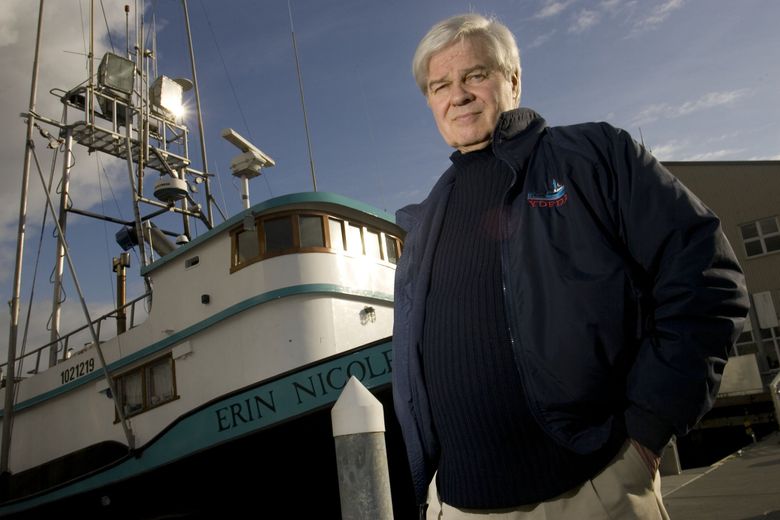
Some months back Jon Rowley, a man we are proud to claim as a mentor, cheerleader, and friend succumbed to kidney disease.  Jon defines an era of Northwest seafood and the development of a Seattle-Specific culinary sensibility like no-one else.  He drove and  embodied the change from a volume, commodities-driven fishery to the joyful, quality focused and and sustainable fishery we enjoy and celebrate today.  All of us today in the business who aspire to do anything worthwhile are Standing on the Shoulders of Giants, namely Jon.  Those interested in Jon may find more information in a handful of excellent articles profiling Jon, includinghttps://www.seattletimes.com/pacific-nw-magazine/jon-rowley-promotes-the-tastes-we-come-to-crave/.
Sunday, greater Seattle gathered to mourn his passing.  Yesterday a smaller group gathered to enjoy a meal in his spirit.  We were lucky enough to furnish the salmon for this meal-- spectacular FAS Queen Charlotte Islands Ivory King Salmon.  Last night we enjoyed Kevin Davis' version of this fish, prepared for Jon Rowley's memorial dinner.  The fish is everything we could have hoped for, and a fully fitting for Jon's farewell meal. The most special of fish for the special-est of people.  We have a limited volume of this fish available as frozen or refresh, H&G or fillet.  Don't let these fish slip away without offering them on your plate!

http://78.media.tumblr.com/tumblr_l80pn9Ix3X1qcyka1.jpg 
The best of the best.

Diatoms to the Rescue. 
While the rest of the nation labors under snow and storm, we West Coasters have been enjoying an uncommonly sunny winter, reminiscent of dimly remembered Washington winters of the early 1980s.   At Jones Ranch this means the winter grain is shooting up and the elderberries are leafing out.   At the shellfish farm we have seen the first algae of the season, the slimy, ground-swelling chain diatoms.  This is about three weeks earlier than usual.  What this means is that algae eaters, including oysters, are getting an unexpected gift of food and flavor-boost.  To you, this means that all Washington oysters are developing the high, glory flavors of early spring early this year.  We can already discern the high, lingering flavors of spring in the animals.  It has been a long, long time since we have seen an early spring here.  Every winter puts northern folk to the test and every spring is a gift and a joy, whether it comes in January or in April.  Here's to the oysters, here's to the weather, here's to the single celled photosynthesizing critters who make it all happen.  

Algae Eaters, and Eaters of Algae Eaters, give thanks.  

JFF list Highlights 1.16.18.  
Pink Scallops, FAS Ivory King, Nisqually Oysters, Monkfish, John Dory, Giant Pacifc Octo,                            Lopez Island Smelt, Quinault Steelhead, AK Spot Prawns, OR, Brine Packed.    


Until Next Time, we are your Bone-Dry-Voting, Proudly-Tippling, Black Pup-Dodging, Crab-Troubling, Scallop-Extolling, Uchin-Encore-ing, Rowley-Waking, Oyster-Loving, Plankton-Identifying, JFF Crew.

N&S

Call or write! We promise to write back, especially if you place an order!

Friday, November 17, 2017

Fish-O-Gram #28--Holiday Schedule. The Harmful Algae Blooms Edition. Greenies are A-OK!! A Flood of Spot Prawns!! Crab prices hit low point for 2017!! Pink Scallop Countdown!! Oyster tasting at Franks, December 5.

Dear Storm-Lashed Customers, 


https://kxro.files.wordpress.com/2012/10/pg43.jpg
Meanwhile down at the docks.

Holiday Schedule. No Deliveries Thursday or Friday (Nor on Weekend).

SEATTLE DELIVERIES- Monday, Tuesday and Wednesday. Closed Th & F. 

SAN JUAN ISLAND DELIVERIES- Tuesday ONLY.

SKAGIT DELIVERIES- Monday Only. 

BELLINGHAM DELIVERIES- Wednesday Only. 

OUT OF AREA SHIPMENTS- Monday shipping Only for urchin/crab. Fresh/Frozen Fish & shellfish shipping Mon-Wed.  

It's going to be a good winter.....
Fall is now officially the mode of the day on the water and at Jones Ranch.  Coho is definitively done--the last few we have seen have been nasty and snaky--bruise-colored flesh and thin belly walls.  Best to let them spawn at this point.  Halibut has been relegated to memory and frozen product.  From here on 'till mid March West Coast Fish availability will be subject to weather, limited as far as species availability and generally squirrely.  Fortunately, JFF has been diving and digging deep and far afield to keep you covered.  Urchin fisheries continue strong and the urchins themselves are beyond lovely.  Remember--every blow this time of year works to stretch out the urchin quota.  Spot Prawns are suddenly, unaccountably, exploding out of the woodwork.  Eastern fisheries are robust and varied, with good abundance of John Dory, Monk and various exotic offerings.  Best of all, we are now on the one-week countdown to renewed Pink Scallop harvest and sales!!

Inline image 4
Back on Point

Green is the New Uni!!!
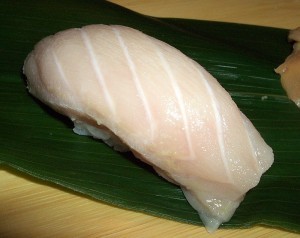
We have not sold green urchins the last few years due to concerns about quality and consistency.  The reds seem to be going from strength to strength, year by year, quality-wise, while the greens have lagged behind.  Based on a batch we sampled last week, we are delighted to report that the greenies are back on.  Green Urchin uni is sweeter, smoother and milder than red.  We consider it a "gateway" Uni--perfect for gentler palates and new Uni-eaters.  So from here on out, Green, as well as Red, means Uni.

Inline image 1
Travis and friend.  

Crab Pricing Falls to 2017 Low!!!!
California Coastal crab opened Weds and we expect volume to be excellent.  Crab pricing has fallen to the lowest levels in 2017.  Washington and Oregon Coasts are held up due to low meat yields in test catches, but overall abundance looks excellent and when those fisheries open, prepare for a crustacean deluge.  Here in Puget Sound our tribal fleets are banging away with the best catches being in the San Juan Islands.  State crabbers will likely go back on the water around the holidays.  What this means is a unique combination of abundant supply and moderate pricing.  Now is the season to run a crab program.   As ever, unlike the broadliner competition, we specialize in Puget Sound Crab, the Acme of Dungeness Crab.

Spot Prawn Bonanza!

Inline image 1
Prawn-O-Rama!

After years of poor and fitful spot prawn availability and extremely high pricing, we now have an abundance of high-quality frozen prawn tail options.  We have size-graded 2016 product for excellent prices, O/R 2017 production at reasonable prices and size-graded 2017 tails for acceptable prices.  Your choice!.   Some of our fussiest customers have been delighted with the 2016 and are buying large volumes to secure availability.  The frozen-in-brine prodcut pictured is the finest retail pack we have ever seen.  Check the pricelist--Don't let the best prawns in the world slip by!

Prepare for the Pink-Out!!!
Inline image 2
The Scallop Fishery is almost in Hand

Pink Scallops are Almost Back!!
It's almost time to welcome back the elusive princess of your seafood menu, the legendary Pink or Singing Scallop.  The extreme seasonality of the scallop only makes them more precious in our minds, but there again is a story to be told.
After a barn-burning spring of scallop harvest and sales, things came to a screeching halt in mid-June as PSP, or red tide levels hit dangerous levels.  Since then the Scallops in our storage system have stubbornly held onto PSP levels oscillating just around the danger zone.  It has been deeply frustrating.  This week we finally realized a safe test result on both our storage-held scallops and product fresh from the harvest grounds.  Assuming we get clean results come Monday, we are back in the scallop business.  Given the holiday, figure first deliveries the week of the 27th.  Long-time Fish-O-Gram readers understand the epic struggle that bringing the scallop fishery back on line has been.  Every scallop harvested and sold is a victory and a triumph--a triumph for culinary endeavor and the human spirit over the nightmare molasses of fish bureaucracies.  But the creature that has bedeviled us these past months is not on the government payroll.

http://www.fis.com/fis/worldnews/images/51345_345x275_72_DPI_0.jpg 
I don't work for the City, I don't work for the State
.

Science Corner, HAB Edition.
We here at Jones Ranch have become fascinated by Biotoxin-producing algae.  After all, we have a positive relationship with phytoplankton in general.  We grow it at the shellfish hatchery for our baby oysters, wild algae is the fodder that grows our oysters and feeds the salmon we treasure.  The magically-named Noctiluca scintillans (translation: twinking night light) creates the phosphorescence, or fire in the water that is the joy of night-time seagoers world wide.
Algae is the building block of life in the watery reaches of the world and it supplies 80% of the oxygen we consume and is by far the largest driver in global carbon cycles--this is fascinating topic, by the by.  Our third child grows algae in jars on the kitchen table. 

Inline image 3
We love Algae


When Algae Goes Bad....
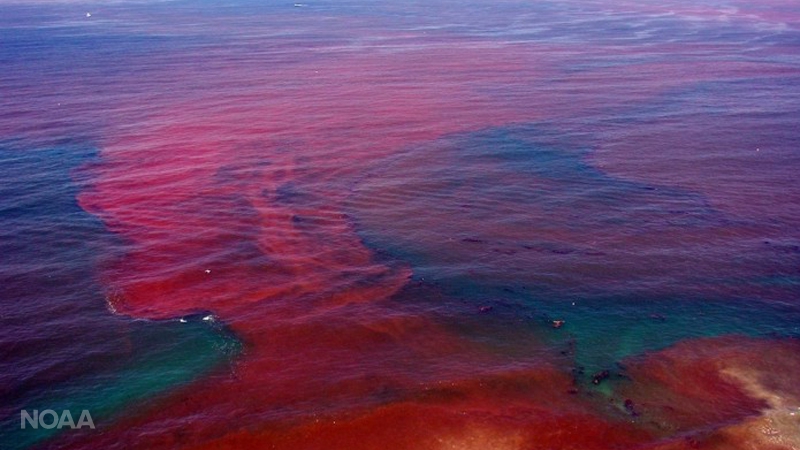
F.O.G. would go so far as to claim an affinity with and affection for phytoplankton that most people have with puppies or sloths.  How then to consider algae turned bad? Harmful Algal Blooms, or HABs as they are known in the business, cause massive harm--from the potentially fatal Paralytic Shellfish Poisoning to the hazards of Domoic Acid, caused by blooms of Pseudo-nitzschia phytoplanktonto the newly emerged threat of DSP, or Diaretic Shellfish Poisoning, which is at is sounds.  HABs cause huge disruptions in seafood supply--though generally blooms are not generally harmful to lower-order marine organisms.  Plankton-eating shellfish and some species of fish and crab concentrate the compounds.  When these creatures are in turn eaten by animals with central nervous systems, like otters, whales and humans, trouble arises.  Otters in particular seem to be subject to heavy mortality from eating tainted clams.  

Beware the Birds.
Some impacts from HABs are downright whimsical, Nitzschia navis-varingica can cause temporary amnesia in humans and animals, or Amnesic Shellfish poisoning.  Alfred Hitchcock drew from a real-life invasion of confused, belligerent seabirds in Capitola California in 1961, presumably caused by a Nitzschia navis-varingicabloom in nearby waters, to flesh out the horror film, "The Birds"  More recently, a deranged Pelican flew through the windshield of a motorist on the Pacific Coast Highway in 2006.  Accident investigators fingered AmnesicShellfish poisoning as the aggravating factor.  Washington State Department of Health has monitored for HABs since the early 1940s and the program has developed into the best and strongest in the nation.  Yet for all the resources dedicated to identifying HABs and mitigating their impacts on humans and seafood supply, remarkably little is known about the whys and wherefores--there seems to be no good reason for plankton to create toxins--it is costly to the organism and does not seem to benefit the algae, and yet a wide range of them do.  Some toxic algae, like Pseudo-nitzschia, turn their toxin-producing capabilities on and off based on unknown environmental or biological cues.  At times plankton monitoring will identify huge abundance of Pseudo-nitzschia with little or no toxin being produced.  Others species, like Alexandrium catenella, the PSP, or saxitoxin producing algae, are always on--when present, they are producing PSP toxin.  Because producing toxin is so costly to the algae, species producing toxins are generally very narrowly adapted.  This is good in one sense, as they are not fit to compete with the general run of phytoplankton, and so blooms are rare.  But when conditions line up, the harmful species have the capacity to explode in abundance and dominate the ecosystem for a period of time.  The best operating theory is that these particular species of algae were, sometime in the dim genetic past, colonized and co-opted by toxin-producing viruses.  

Different species of shellfish concentrate, clear and hold the toxin at vastly different rates.  Mussels are typically the fastest to accumulate toxin and the quickest to release it.  Because of this sensitivity, mussels are typically used as the sample species to monitor PSP.  Butter clams and geoducks are the slowest both to take up toxin and then to release it--a geoduck farmer friend some years back faced a full year of harvest closure.  His ducks went hot in mid-spring one year, stayed mildly hot through the summer months, then went into dormancy without clearing the toxin.  Jerry Borchert, PSP guru for the DOH, speculates that different species have various degrees of "stickiness" for saxitoxin in gut lining and soft tissue.  And our geoduck friend?  After a year with no revenue his business more or less collapsed.  Taylor Shellfish took over his leases and last we heard he was renovating and flipping houses in Tucson Arizona.

https://www.gannett-cdn.com/-mm-/91a8864ed495f9a350b8c371ad444aabd4fe92b4/c=0-0-1600-1200&r=x404&c=534x401/local/-/media/2017/09/12/Shreveport/B9329284331Z.1_20170912163906_000_GP4JKJEV3.1-0.jpg 
The long-term impacts of PSP

Biotoxins are always with us.  
Harmful algaes are nothing new.  Coastal dwellers have known of toxic algae, and known that it concentrates in filter feeders, as long as people have lived on the coast.  Local natives would feed suspect shellfish to dogs before consuming it themselves.  San Juan County herbalist and folklorist Ryan Drum tells a story of a feast sometime in the early dawn of European contact wherein Vancouver Island natives deliberately fed toxic mussels to Spanish fur traders, with predictable results.  Biotoxins are not all bad, the Japanese have used Pseudo-nitzschia derived compounds as wormers for millennia.  Modern medicine is finding all kinds of uses for these compounds, including as highly effective treatment for anal fissures.  Both the range and frequency of toxic algal blooms seems to be increasing.  This may be a result of warming seas, nutrient loading, better tracking and detection, some form of cyclical variation, or all of the above.  Some years in Puget Sound are bad biotoxin years, some are not.  The last few years have been quite benign, though we did have an unexpected spike in this last October.

https://cdn.arstechnica.net/wp-content/uploads/2017/04/1372.jpeg 
Same as it ever was


Scallops and PSP.
The primary tool WA DOH uses to monitor PSP outbreaks is a robust predictive model based on 70 years of testing and tracking PSP outbreaks.  If X area turns up hot, more than likely area Y will follow.  Areas typically prone to PSP are monitored regularly during weather conditions generally associated with Alexandrium blooms.  What this means in practical terms is that if Chuckanut and Mackaye Harbor turn up hot, Jerry Borchert will begin rounding up samples from the next tier of sites, say Eastound, Olga and Shoal Bay.  This system works very well.  Washington State commercial shellfish has been remarkably safe for many decades, in spite of increasing seasonal and geographical occurrence of HABs.  The particular glory of   Alexandrium  is an uncommonly strong swimming ability--therefore they flourish in times of striated water conditions, with limited mixing between water layers.  When upper layers of water become depleted of nutrients other, less mobile plankton fade out.  Alexandrium are able to swim down to deeper water, tank up on nutrients, then hoist themselves back up to bask in the sunlight.  They typically thrive in areas of clean, clear water with high salinity--this is why the Straits frontage of the Olympic Peninsula is so prone to shellfish closures.  Contrary to popular belief, Alexandrium are not more common in heavily polluted areas—the areas in our state most prone to outbreaks actually have the cleanest water.  When conditions turn less favorable for the Alexandrium, large numbers of the algae will cocoon themselves and form dormant cysts that can live on the seabed for years or decades.  Ultimately, when conditions warrant,  the algae react to some unknown cue,  break out of their cyst, swim to the surface and begin merrily photosynthesising, dividing and creating toxin as if they'd never quit.  Many algae species have a cystic cycle-this is what the vast biomass of deep-water filter feeders subsist on, and there is no way to predict when and how deep-water feeders will come upon a batch of cystic Alexandrium.  DOH's predictive models are of little use in tracking PSP levels in deep-water species like scallops.  Further, DOH had very little data on how and with what speed scallops uptake the toxin and how and with what speed they release it.   

https://microbewiki.kenyon.edu/images/thumb/3/3d/V43n2-anderson3en.jpg/200px-V43n2-anderson3en.jpg
It's the quiet ones you need to watch out for. 

JFF, Expanding the Boundaries of Human Knowledge.
The old-time scallop fishery foundered on this problem--every harvest batch needs to be tested.  A scallop with an effective shelf life of three or four days cannot be harvested, held out of the water for the duration of a test and then delivered to market with any degree of success.  Our process is that harvested scallops are transferred to our holding system and held in water while the test is going through.  Being held in our growing area means no surprises--This allows us to ship guaranteed fresh and guaranteed clean scallops.  Our thinking going into this exercise was that hot scallops transferred into the tanks, as happened last June, would rapidly purge themselves of saxitoxin, given the high metabolism of a swimming scallop.  Unfortunately, this proved not to be the case.  Scallops have proven to take up the toxin faster than mussels and release it more slowly than almost any other creature.  Certain weeks side-by-side testing showed no detectable toxin in mussels while at the same time PSP levels in the scallops were spiking.  This is wonderfully interesting from a research perspective, but frustrating from a commercial point of view.  Moving forward we are going to begin using a pregnancy-checker-esque PSP test as a pre-screen for scallops to help us target harvest and reduce the strain on the DOH lab, not to mention the lab mouse population.  This too will be deeply interesting.

Red means what?

Scallops to the Rescue!!!
So bust out your pink party hats, whip up some mignonette and pour another glass of sancerre.  The scallops, safe, certified and island-fresh are headed to your menus.  Just in time for the holidays and just in time to relieve the seasonal-seafood doldrums.  It's going to be a good winter.  New customers; please take a moment to check out our archive of Scallop-themed information and the excellent roster of press about the return of the scallop fishery at our website, jffarms.com.

As for Jerry Borchert, Audrey Coyne, Clara Hard and the other good folk involved with the DOH biotoxin program, who have an unparalleled record for keeping diners safe while enabling the Washington State Shellfish industry to grow and thrive, JFF salutes you. 

And for those of you who enjoy harvesting your own, yes, the advisories are for real and also apply to gooseneck barnacles.  Recent years have seen dramatic increases in the number of Rainier-Swilling hipsters on culinary safari prying barnacles off the South End of Lopez.  Here at Jones Ranch we are deeply concerned about this from a public health perspective.  There is no current DOH testing of barnacles, nor is there any data we can find on their PSP uptake and retention properties.  All real food involves risk, but pushing the biotoxin  envelope is not a wise move.  We confine our barnacle eating to deep winter months for these reasons.

https://pbs.twimg.com/profile_images/818218901/hipstersafari.jpg 
Be safe. Lay off the barnacles. 


Please join us for an oyster and pink scallop tasting event at Franks Oyster House 5-8pm December 5!!!! 
Inline image 5

In our expanded capacity as Marinelli Shellfish Reps we will be holding as many of these vents as we can find venues to do so in coming months.  Please reach out if you would like to host one.  

The last event, at the White Swan Public House was a storming success, as was Elliot's Oyster New Year last weekend.  We are delighted to report that the Hammersley, our November Oyster of the Month, swept the prize board at Oyster New Year.  Congratulations Troy Morris and the entire Calm Cove crew!!!!!!

Until next time we are your Green Urchin-Cracking, Freezer-Diving, Scallop-Sciencing, Safely-Barnacle Harvesting, Award-Winning Oyster-Selling JFF Crew!
Call, Email or text. 


Nick & Sara